|
Howdy Sequencer gang, We have a special post-Thanksgiving edition of the newsletter for you today. All of us on the team are always working to refine our crafts. To find better stories. To report better. To write better. The best advice is generally obvious: read good shit. I’m sure I speak for all four of us (and probably most of you) when I say that I wish I could dedicate more time to reading. But in those moments that I do make time, I’ve delighted in banking some snapshots of sentences and sentences that floored me. Turns of phrase that made me smile or unexpected verbs that inspire me to improve my own writing. Knowing that I’m not the only one on this team to geek out about language, I asked the team to compile some of their own personal favorites. They each surprised me with their own take on the prompt. I loved reading through what they came up with. Find that below. A couple quick reminders before you scroll down to our little digital pastry case… - Thank you to all of those who upgraded to paid memberships after our request a few weeks ago, and of course thank you to the loyal subscribers who have supported us for even longer.
- Kim wrote about porcupines! Unfortunately they’re becoming increasingly rare in the wild for reasons scientists aren’t entirely sure. It didn’t help that these walking pincushions faced decades of persecution — poisonings, being shot on sight — by the timber industry. Although such practices have wound down, porcupines don’t seem to be coming back. Have you seen one in the wild? Write to us at hello@sequencermag.com.
- And last but not least, we hope your holiday season is safe and warm holiday season filled with family and friends. That’s easier said than done for some people, especially in a tense time full of too much hate and hostility. I recently came across this post by writer and trans person Rey Katz, offering “a supportive theory for visiting folks for the holidays”
Rey’s newsletter Amplify Respect is great for anyone (trans, friends, family) looking for an important perspective at a time when the federal government and healthcare institutions seem to be turning their backs on civil liberties. That’s all I’ve got! Enjoy the sentences below and may they inspire you the way they inspire us. Thanks for reading and supporting 💗 Some sentences that stuck:Max: On a friend’s recommendation, I recently read Veniss Underground. I’m not really a sci-fi guy but I loved how playful the language was. Like it genuinely seems like Jeff VanderMeer just had fun making shit up to build out a weird, weird, WEIRD world in this book. And I’m finding so many little phrases that stick with me. “Then he was gone, taking long, ground-eating strides away from me down the docks, without even a goodbye or a chance to thank him.”
“With the sound of the clap—a naked sound in that place—his head snapped toward me and a smile broke his face in two.”
Naked sound!! Smile broke his face in two!!!!!!!! 🫠 I just started reading Robert Macfarlane’s The Wild Places and it’s exactly what I was hoping for — poetic nature writing with a purpose. “I could see a kestrel riding the wind, its wings shivering with the strain, its tail feathers spread out like a hand of cards.”
“Anyone who lives in a city will know the feeling of having been there too long.”
So simple but it really hit. I also started Lonesome Dove before I had to return it to the library (long, long, long before I would have finished this long, long, long book). But here’s a sentence from the intro that made me laugh out loud “‘No slop-eating pig is as smart as a horse,’ Call said, before going on to say worse things.”
One of my favorite little stories of the year was Temporary by Hillary Leichter, a surreal book about a woman who works absurd temp jobs like CEO, pirate, and barnacle. “With trusty carpal alchemy they knead my resume into a series of paychecks that constitute a life.”
Dan: Stephen Jay Gould was a famed evolutionary biologist and snail expert who also wrote decades of essays and book collections, often on evolutionary biology but also often on whatever he wanted. Because of a crushing desire to come off as intellectual that I’ve had all my life, I started reading his essays when I was 15 or so, well before I could really understand them. Nevertheless I do think I picked up some parts, especially stuff I thought at the time was just funny—like his famed essay in Hen’s Teeth and Horse’s Toes about how hyena penises and hyena clitorises are ballpark the same size, but upon reflection spoke to my now-bone-deep vision of biology as essentially one big spectrum across all phenotypes. 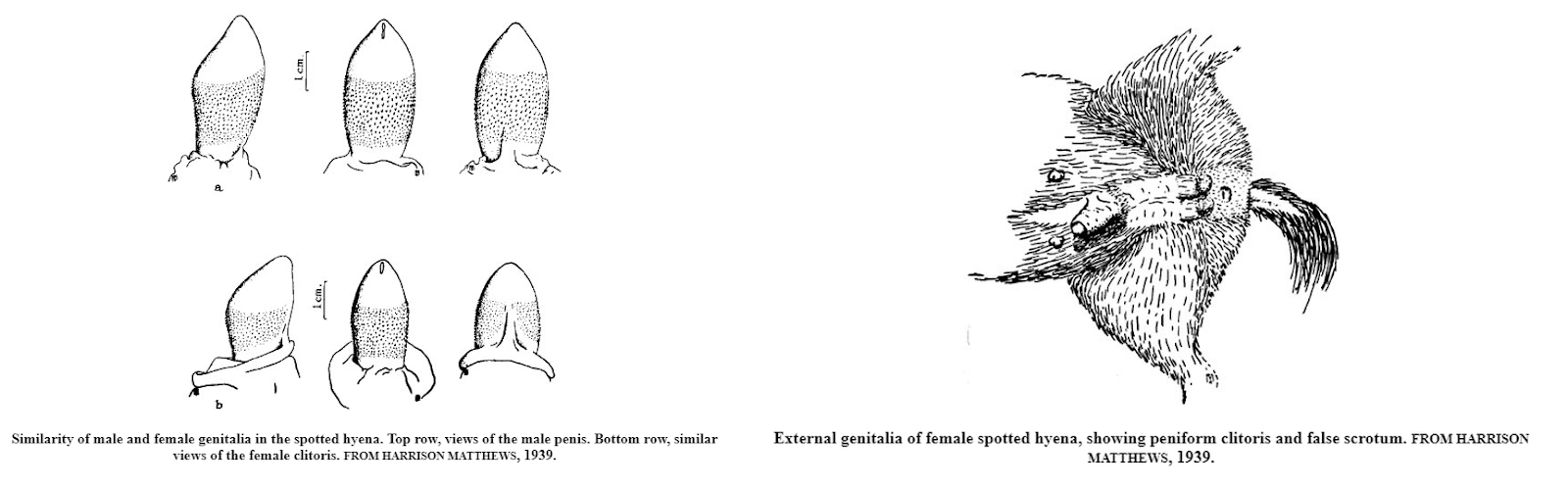 Two images that I well and truly think forever shaped my worldview. “When two hyenas of the same clan meet, they stand side to side, facing in opposite directions,” Gould wrote. “Each lifts its inside hind leg, subordinate individual first, exposing either an erect penis or clitoris, one of the most vulnerable parts of the body, to its partner’s teeth. They then sniff and lick each other’s genitals for ten to fifteen seconds, primarily at the base of the penis or clitoris and in front of the scrotum or false scrotum.” Gould was an old Jewish guy from New York City but wrote like he was born four hundred years ago—he was nobody’s idea of a crackling prose stylist. But he had his moments, ending the hyena essay: Peter Medawar has described science as the "art of the soluble." Evolution might be labeled "the transformation of the possible."
I picked up another of his essay collections, Bully for Brontosaurus, at a bookstore a month or two ago. It opens with a (vaguely self-congratulatory) prologue about being a science writer, and who their readers are: “In France, they call this genre vulgarisation—but the implications are entirely positive. In America, we call it ‘popular (or pop) writing’ and its practitioners are dubbed ‘science writers.’
“In France (and throughout Europe), vulgarisation ranks within the highest traditions of humanism, and also enjoys an ancient pedigree—from St. Francis communing with animals to Galileo choosing to write his two great works in Italian, as dialogues between professor and students, and not in the formal Latin of churches and universities.”
(skipping ahead) “The ‘perceptive and intelligent’ layperson is no myth. They exist in millions—a low percentage of Americans perhaps, but a high absolute number with influence beyond their proportion in the population. I know this in the most direct possible way—by thousands of letters received from nonprofessionals during my twenty years of writing these essays, and particularly from the large number written by people in their eighties and nineties, and still striving, as intensely as ever, to grasp nature’s richness and add to a lifetime of understanding.
“We must all pledge ourselves to recovering accessible science as an honorable intellectual tradition. The rules are simple: no compromises with conceptional richness; no bypassing of ambiguity or ignorance; removal of jargon, of course, but no dumbing down of ideas (any conceptual complexity can be conveyed in ordinary English). Several of us are pursuing this style of writing in America today. And we enjoy success if we do it well…We must be vigorous in identifying what we are and are not, uncompromising in our claims to the humanistic lineages of St. Francis and Galileo, not to the sound bites and photo ops in current ideologies of persuasion—the ultimate in another grand old American tradition (the dark side of anti-intellectualism, and not without a whiff of appeal to the unthinking emotionalism that can be a harbinger of fascism).”
He wrote that in 1991. Maddie: I’m sorry all, I work in audio and am also trying to read more, but the phrases/moments that inspire me lately have been visual! So I shall choose to not interpret this prompt literally. My favorite dance phrases come from the pole artist Suzanne-Michelle. I love her use of static rotation (making it look like the pole is spinning when it’s not) but here’s a wonderful example of her intentionality from Instagram. Another visual phrase I’ve been fixated on is this one from a video of a guy skiing down Mount Everest: The scale! Wow! In terms of actual verbal words, I was having a conversation yesterday about words I wish would have a resurgence. One I heard was “peachy,” another “lousy.” So, how’s your holiday season been, peachy or lousy? I like the word “nihilistic” too, because it’s Latin. Let me know which words you want to bring back into the vernacular! Kim: As I wrote in a previous newsletter, Barbara Kingsolver is my writing hero. This year, I binged three of her books, and I still couldn’t get enough of her writing. I’ll let her words from Demon Copperhead, Unsheltered, and Flight Behavior speak for themselves: “They all attended Hester’s church, which Dellarobia viewed as a complicated pyramid scheme of moral debt and credit resting ultimately on the shoulders of the Lord, but rife with middle managers.”
“His mustache made two curved lines around the sides of his mouth like parentheses, as if everything he might say would be very quiet, and incidental.”
“I used to go there just to be off by myself, safe. Nobody ever found me there. The soft dirt floor and sweet tobacco smell in the dark always put a spell on me, like starting life over in the belly of some mom that was getting it right this time.”
“I was living life as a flat tire.”
|