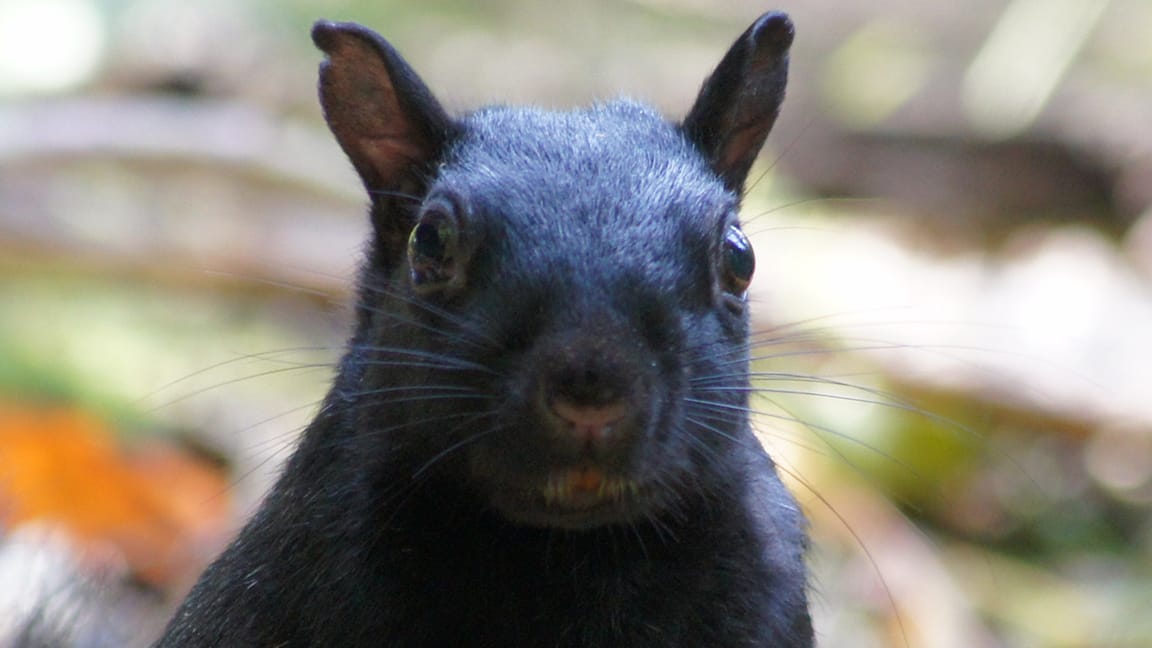
THE STAIRS© Tom Scocca, 2025 This is a work of fiction. Any resemblance to actual people, places, and events is entirely coincidental, with the exception of the events in Chapters One and Two, which happened more or less as written, on the line between Cambridge and Somerville, Massachusetts, on Memorial Day weekend in 1999. 7."That was good pie," Theo said. "When do we go back and get some more?" "Pie," Maxine said, "is the least of our concerns." It was the afternoon and we were sitting out in the sunshine, on a park bench, at Fort Muntjac. Fort Muntjac is an old Revolutionary War fort all the way down at the southern tip of Old Marble, at the mouth of the harbor. We'd gotten Emily to bring us out to the fort on the subway after lunch. It was too boring sitting around with no furniture, and we weren't ready to try the stairs again just yet. "We've got money we can use for it now," Theo said. After we got back upstairs and hid our slushy things in the closet, we had spread out the collection of change Norman Melk had given us on the rug. Maxine and I had explained to Theo that the two biggest ones were half-dollars. Not that we'd personally seen half-dollars like these before, with an eagle on one side and a woman in a flowing robe, labeled LIBERTY, on the other. The years on them were 1937 and 1939. The dimes had someone wearing a winged hat on them, and some of the nickels had a bison and an Indian head—my mom had nickels like that, in her old coin collection at my grandparents house. One of Norman Melk's quarters had a robed LIBERTY woman on it, but the rest were the regular old-fashioned quarters you still see around, with George Washington on heads and an eagle on tails. The pennies were pennies, except with wreaths on the backs. All told, we had $3.37, in coins with dates that ranged from 1904 to 1940. "We could get pie 11 more times," Theo said. "If Maxine doesn't keep getting tea, too." "You're not including the tip," Maxine said. "And I'll have tea if I want to. But stop talking about the pie. Going by what Eugene told us, and every other piece of evidence, that stairway and what's outside it somehow exist in the year 1940." "Has it always been in 1940?" I said. "Or last year would it have been in 1939?" "We have no idea how the connection works, or whether there even is always a connection," Maxine said. "But we spent about a half hour down there, and about a half hour had gone by upstairs. So time seems to be moving the same speed here as there. Here and there? Now and then? Either way, if we had gone out and eaten pie here, it would have taken us just as long." "It's not a diner here," Theo said, a little grumpily. "It's a record shop. You can't get pie." I stopped listening to him and looked around at the lawns and grassy mounds inside Fort Muntjac. Here and there were old trees, and it was all surrounded by the walls of the fort, in the shape of a five-pointed star. Out beyond three of the points, to the east, south, and west, the harbor was glittering and a little hazy. The fort has cannons you can climb up on, and a few workers go around dressed up as soldiers from the Battle of Marble, when the fort held off the British fleet till the British sailed off and invaded the next city instead. The first time I went was on a school trip, where we were supposed to sit and think about war. Maxine and I had decided it would have been pretty fun to hunker there on the high ground with the cannons, trying to sink the British boats. We'd debated what it would take to sink the normal boats going by—big container ships heading for the Port of New Marble, tugboats with barges, sailboats, little ferries—and figured the tugboats would be the toughest. They were maneuverable and looked like they could survive a cannonball or two. "The name Fort Muntjac," a man in breeches and a three-cornered hat was now saying to a group of tourists, "derives from 'Mont Jacques,' the name French explorers gave to the hill that they found overlooking the harbor. Through colonial times, in the settlement of Marble City, the heights of Mont Jacques were cut away, and the rock and dirt employed to fill in the marshes and shallows behind it. Thus the city—" He walked on, out of earshot. A squirrel ran across the grass, from the foot of one big tree to another and on up it, with another squirrel chasing after. Both squirrels were black all over. A lot of squirrels in Marble City, especially around Old Marble, are black squirrels—they're just like the gray squirrels we were used to in Turfburo, but dark. Supposedly someone years and years ago thought they looked nice and let some loose, and they multiplied. "What do you suppose Norman Melk was worried about, with the acorns?" I said. Emily was two benches away, eyes on her textbook, not listening. I got my acorn out of my pocket and looked at it again: it was an acorn. Smooth, a little elongated, with a cap on the end. The second squirrel, which had been chasing the first squirrel around and around the trunk of the tree, froze and stared toward us. "I think it's looking at your acorn," Maxine said. Keeping its eyes our way, it came straight down the tree, smoothly but fast, and came bounding over the grass. It stopped about five feet away, just on the far side of the walkway that ran in front of the bench, and cocked its head. I could see how dark and shiny its eyes were, and could make out the individual fluffy hairs on its tail. It stared at me, and I stared back at it. "You looking for this?" I said, holding up the acorn. The squirrel stared for one more second, then spun and went back the way it had come, moving so fast it was like it was flowing over the ground. It went right up the tree, into the branches, out of sight. Ten seconds later, it came back down again and made a beeline for us. This time it came right up on the pavement, almost to our feet, and sat up on its hind legs. I caught a flash of something shiny in its forepaws. The shiny thing dropped with a ringing sound on the concrete and rolled sideways to Maxine's feet. She picked it up. "It's another one of those buffalo nickels," she said. "Nineteen twenty-eight." The squirrel looked over at her, then it looked over at me. I was still holding the acorn. "Give it," the squirrel said. Find other chapters of The Stairs here. EASY LISTENING DEP'T.EASY LISTENING DEP'T.Here is the Indignity Morning Podcast archive! SANDWICH RECIPES DEP'T.WE PRESENT INSTRUCTIONS for the assembly of a sandwich selected from Cassell's New Dictionary of Cookery, published in 1912 by Cassell and Company, London, New York, Toronto, and Melbourne, and available at archive.org for the delectation of all. JAM SANDWICHES. Mix the yolks of two eggs very smoothly with a table-spoonful of flour and a table-spoonful of ground rice, add a very small pinch of salt, a table-spoonful of sugar, half a pint of thick cream, and a quarter of a pint of new milk. Beat the whites of the eggs to a firm froth, add them last of all, and beat the mixture for four or five minutes. Butter two large plates, put in the mixture, and bake in a quick oven until it is set and lightly browned. Spread a little jam over one of the cakes and lay the other upon it, the browned part uppermost. Sift a little sugar over it before serving. Jam sandwiches may be eaten either hot or cold. Time, twenty minutes to bake. Probable cost. 1s. 4d. Sufficient for three or four persons. If you decide to prepare and attempt to enjoy a sandwich inspired by this offering, be sure to send a picture to indignity@indignity.net . SELF-SERVING SELF-PROMOTION DEP'T. Indignity is presented on Ghost. Indignity recommends Ghost for your Modern Publishing needs. Indignity gets a slice if you do this successfully!
|