In 2026, Will Americans Finally Turn Against Oligarchs?Americans are noticing private equity roll-ups in everything from youth sports to fire trucks to big tech. And they really don't like it. Is a genuine anti-monopoly revolt finally brewing in 2026?
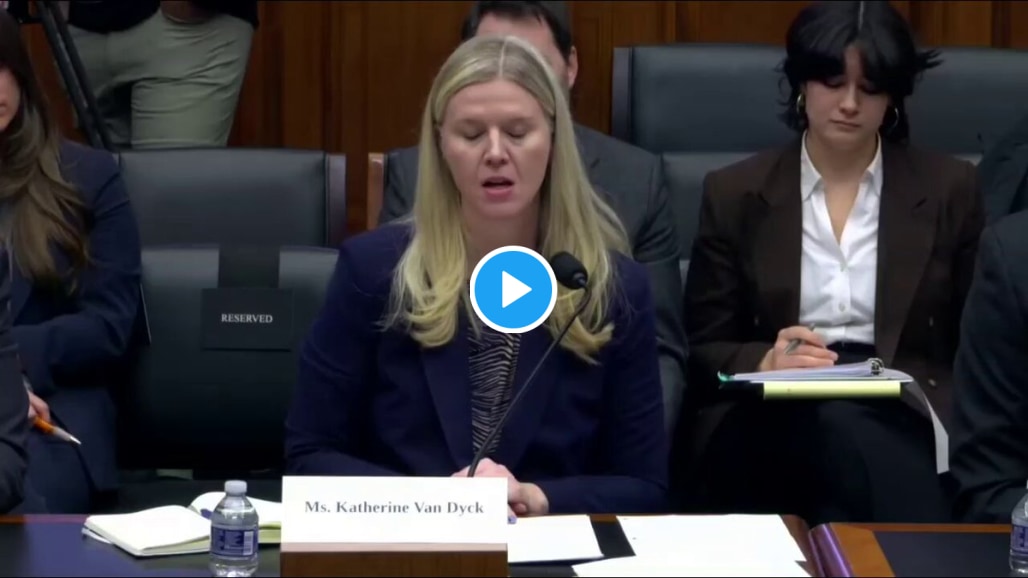
In the winter of 1932, during the depths of the Great Depression, a visitor asked Supreme Court Justice Louis Brandeis if he thought the worst was over. “Oh yes,” he said, “the worst took place before the crash.” Brandeis, who had predicted the disaster before it occurred, believed that the sunny lies of the roaring twenties had deluded the American people. The depression, as horrible as it was, as shameless were the business tycoons who caused the crash, was fostering a great debunking of myths. As a result, he believed, America would “gain much from her sad experience.” There’s a misplaced belief that optimism about democratic politics is sunny and naive, reflecting of joyful circumstances, while cynicism is savvy and realistic, reflecting the grittiness of real life. The truth, as Brandeis knew, is the opposite. Disillusionment, a numbness to injustice, is the great villain of democracy. In the 1920s, after two decades of reform and a great war, the voters had become cynics. As one famous Senator, Hiram Johnson, put it, the people had become “docile, and they will not recover from being so for many years.” It was during that time of great cynicism that the imbalances and corruption unmasked in the 1930s built up. Only when the public recovered its ability to be outraged, to believe in collective action, that Americans could once again see their society as a free people and act upon it. The actual economic collapse started in 1929, and it continued and worsened even as Brandeis became more optimistic. It was the public learning and regaining its liberty that had to come before the material part could be fixed. Two weeks ago, I helped a colleague, an antitrust lawyer named Katie Van Dyck, prepare for a Congressional hearing on youth sports titled “Benched: The Crisis in American Youth Sports and Its Cost to Our Future. I’ve helped prep a lot of people to testify. Most get little attention. Van Dyck was talking about private equity and its roll-up of youth hockey, football, baseball, cheer, and so forth. The cost of youth sports participation has increased 46% in just five years, twice the rate of inflation, with parents often going into debt so their kids can play. The strategies to extract are varied, from overpriced cheerleading outfits to monopolization of hockey rinks to questionable promises to high school athletes they’ll get college scholarships. It’s a horrible story, but to be honest, I didn’t think this hearing would be noticed. Congress isn’t close to finalizing legislation in this area, and there’s no scandalous news peg. Youth sports is just one more corner of the world that has been corrupted; there are so many of these in America that Cory Doctorow coined the term ‘enshittification’ to describe a process of taking a community platform and ruining it for profit. People are just kind of numb at this point to the parade of horribles. Or so I thought. It turns out, Van Dyck’s testimony went viral on social media, because many people have experienced what she was describing. It wasn’t just social media; Barstool Sports, a popular bro network of podcasters, picked up on it. Van Dyck’s comments hit something primal, the corruption of an ideal of youth. Millions of Americans experienced sports as kids and value that experience. They want their kids to have it, and they are seeing that it’s being stolen. Here’s Barstool:
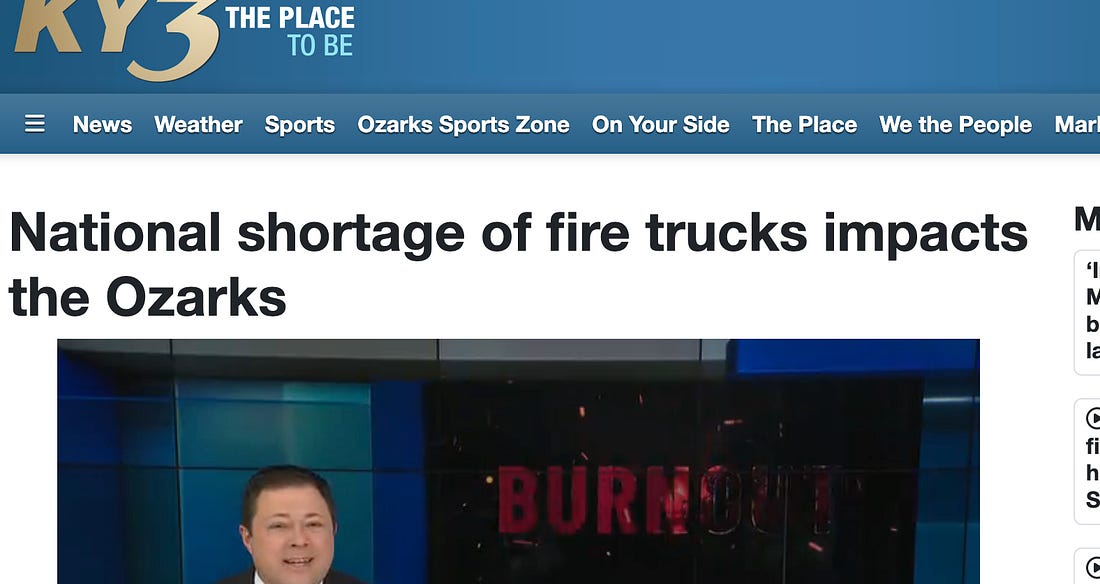
In her testimony, Van Dyck pointed out that the youth sports problem isn’t unusual, but “the same playbook that private equity used to consolidate industries as varied as veterinary clinics, nursing homes, hospitals, and firetrucks—stripping assets, raising prices, and degrading quality.” Just a few years ago, few people talked about these kinds of business methods and tactics, I now see popular videos and articles all the time discussing them. A sad story of corruption is not new, or unusual. What I believe is new and unusual is a popular recognition that it is systemic in the American economy, and a widespread revulsion towards the people doing it. Just bring up Ticketmaster, and it’s fairly likely you’ll see some eye rolling. Part of the reason I am becoming more optimistic is because of our work in this newsletter. The most popular and impactful article that BIG wrote this year was on the private equity roll-up of fire trucks. This article also went viral; it spurred coverage in the New York Times, the Wall Street Journal, many many local news stories, and finally a Senate hearing. There are now endless discussions among politicians and fire chiefs, as well as litigation. Four days ago, Commack Fire District of New York, the city of Liberty, Missouri, and the city of Arcadia, California filed complaints in court against the three manufacturers, which means there are now nine lawsuits.
The problem of private equity and roll-ups is becoming part of political campaigns. Here’s former Hartford Mayor Luke Bronin, currently challenging an incumbent in Congress in 2026, making the point.
Youth sports and fire trucks are iconic, but virtually every part of the American order is falling apart. The U.S. cattle herd is at 80 year lows, Hollywood is dying, and the U.S. military has trouble making enough explosives. In other words, burgers, movies, and bombs are all in trouble. In America! There’s a lot more institutional rot, of course. Health care costs $27k a year per family of four, and is increasing at 7% annually, even as rural hospitals and independent pharmacists close. We don’t see the same prices that our neighbors see, junk fees and subscriptions trap us into paying what we shouldn’t, and tipping prompts are so pervasive that even locksmiths are now requesting tips. I mean, Nate Silver, a skilled gambler and statistician, recently noted the conventional wisdom is that Las Vegas is in decline because its casinos got too greedy. That’s impressively dystopian. There's a lot of polling showing that public is extremely angry, but I want to focus on one specific data point. In a recent NBC poll, 54% of Americans agreed that “When it comes to politics and society, nothing really matters because powerful people will always do whatever they want.” The Epstein scandal has captivated the public because it says something we all know - the powerful are different than you and me.
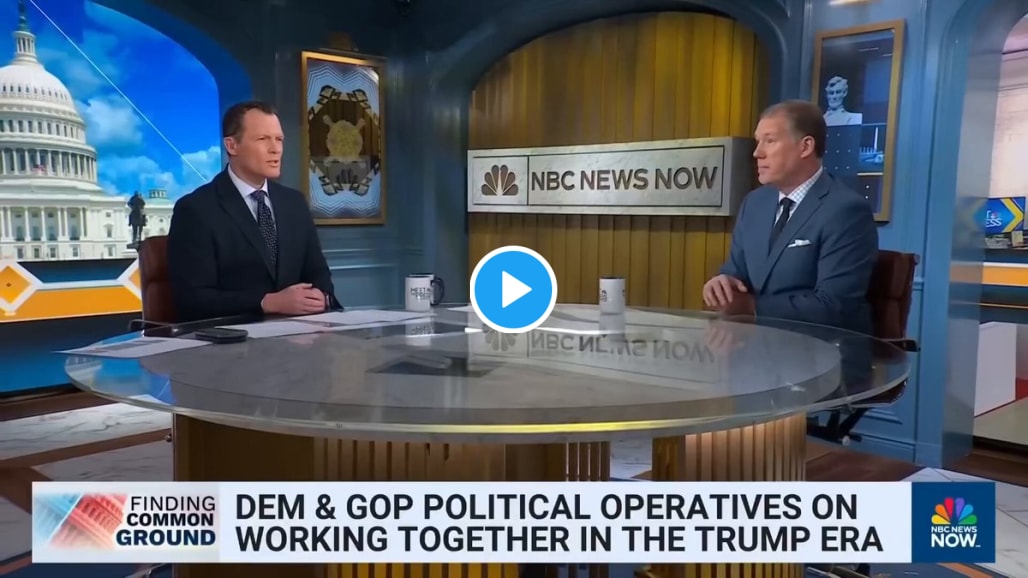
That data point is a very scary number, because it shows that Americans are coming to believe that collective action, everything from voting to supporting basic civic life, is pointless. But it’s also a basis for optimism; voters now know and accept how bad things really are. The public has started to see the superrich as loafers, as corporate welfare cheats. Political leaders can make big and bold claims, and the public will give them a hearing. For the next few years, things are going to continue to get worse, as they did after the 1929 stock market crash and the great slide into the Great Depression. There’s a huge consolidation boom; last week, for instance, Nvidia just openly bought Groq, which will likely preserve its monopoly in AI chips. Mainstream economists will still muse on why economic data shows a good economy even as the public says otherwise, ignoring the fact that systemic cheating in prices doesn’t show up in inflation statistics. The AI boom/bubble will continue or pop, even as 65% of low-income Americans think that “People like me will be left behind rather than realize any real advantages from generative AI.” Donald Trump’s administration will continue to help allies take over large media institutions and fuse coverage with the state, as new CBS news chief Bari Weiss did in canceling a 60 Minutes story last week. It’s unlikely that any of the trends I laid out on private equity will get better, Trump will almost certainly worsen them, since his administration prioritizes the interests of concentrated capital. Sports gambling is everywhere. It isn’t a pure partisan story, of course. The Democratic National Commission Chair Ken Martin just buried the 2024 review of how the party lost, so it wouldn’t embarrass his colleagues. The mainstream of the party is still run by men like Chuck Schumer, who do not believe their job is to do anything but be nice to the wealthy. As another example, California Governor Gavin Newsom’s public utility commission, fresh off waving through insane and unnecessary hikes in electric bills, also approved the merger of Verizon and Frontier. Newsom is leading in the Democratic primary polls for 2028. And yet, America is now starting to “gain from her sad experience.” The anti-monopoly framework is entering the political mainstream, and that’s something I’ve never seen. Consider:
Over the last twenty years, the public has been whipsawed by political failure. Most recently, Joe Biden and Democrats were run out of office because they couldn’t get control of costs for Americans, or even acknowledge their frustrations. Similarly, Donald Trump in his second term ran on affordability, but has so far failed. Trump will still be President for the next three years, so it’s easy to focus on his governing choices. But he’s increasingly a lame duck, and people will start to anticipate what will come after. So what will come next? That’s where public sentiment comes into play. This next year is an election year, and everyone assumes the Democrats are going to win back control of Congress. Now, the Democratic Party is in a deeply confused state. On a policy level, progressives and unions are starting to center the problem of corporate power. It’s Elizabeth Warren, for instance, who is responsible for blowing up the fire truck story. But much of the party bureaucracy avoids talking about big money. There are reasons, of course. One big one is money. Crypto, banks, private equity and big tech are all going to spend hundreds of millions of dollars on elections, and politicians who choose to avoid attacking them tend to get the benefit of that money. Yet, as we saw in 2024 when Kamala Harris spent $1.5 billion to little effect, money has its limits. Another important reason, perhaps more important, is a subtle and powerful ideology that protects and camouflages oligarchy. For nearly my entire life, except for a very confusing financial crisis and Covid shock, politics has been about social identity, forms of dispute that push us into ethnic grievances against one another. We are seeing it with Donald Trump who, despite his rhetoric, has largely supported the interests of the most extractive industries in the U.S., from gambling to private equity to crypto to big tech. That’s unsurprising, since the Republican Party has traditionally been focused on the interests of the wealthy. This time, it’s with a sheen of disdain for immigrants and a short-sighted foreign policy based on pushing the needs of narrow groups, but it’s the same as it has always been. I had hoped it would be different, but alas. On the Democratic side, this ideology is equally powerful. Since the 1970s, and then accelerating after the financial crisis, key parts of the Democrats build a moral architecture based on what they imagine the Civil Rights movement to have been, centered around a top-down human resources corporate framework of imposed social engineering. There were many reasons, from the availability of capital to bureaucratic inertia to a strong desire to not blame the first black President for helping to orchestrate the mass foreclosure of black-owned homes by large banks. Regardless, this moral architecture had the effect of obscuring the rise of oligarchy, camouflaging bad policies, and turning large groups of working class people and white men against liberalism itself. It left liberals unable to staff and equip the many institutions tasked with taming capital, and uninterested in doing so. And it meant that the party was run largely by bankers, economists, and other members of the extreme wealth defense industry. Consider that Fed Chair Jay Powell, a private equity titan, was appointed under Trump, reappointed under Biden, and has gotten zero blame for the remarkably awful economic sentiment under his tenure. Ideology, however, can go both ways. Out of the financial crisis came the anti-monopoly movement, the network of people who think that concentrated economic power is coercive and dangerous. That movement is based on the view that every human is touched by God and meant to be free, but also that too much power is inherently corrupting. They largely center themselves within business, focusing on the importance of fair competition as both a check and a spur for the ambitions of citizens. It is the most powerful anti-oligarchical ideology in America today. And we can see it reflected in the voices not just of people organizing the anti-monopoly movement, but writers at Barstool, Michael Jordan, municipal officials suing fire truck makers, and and endless number of viral videos describing to Americans how their society really works. So that’s my case for optimism. America is starting to regain its common sense, the public is finally seeing oligarchy for what it is, and the culture war itself has started to ebb. Politicians can no longer ignore that voters are saying that they care about prices and affordability, with the subtext that it’s really expensive for a kid to play hockey because some guy with five yachts wants another one. If that’s the theme when voters head into the voting booth, well that’s how countries start changing. Thanks for reading! Your tips make this newsletter what it is, so please send me tips on weird monopolies, stories I’ve missed, or other thoughts. And if you liked this issue of BIG, you can sign up here for more issues, a newsletter on how to restore fair commerce, innovation, and democracy. Consider becoming a paying subscriber to support this work, or if you are a paying subscriber, giving a gift subscription to a friend, colleague, or family member. If you really liked it, read my book, Goliath: The 100-Year War Between Monopoly Power and Democracy. cheers, Matt Stoller This is a free post of BIG by Matt Stoller. If you liked it, please sign up to support this newsletter so I can do in-depth writing that holds power to account.
|