Every month, I recommend books I love that you might too. Every year, I go back collect them into a single post. For reference, here are my picks from 2024, 2023, 2022, 2021, 2020, 2019, and 2018. And now, the best books I read in 2025:
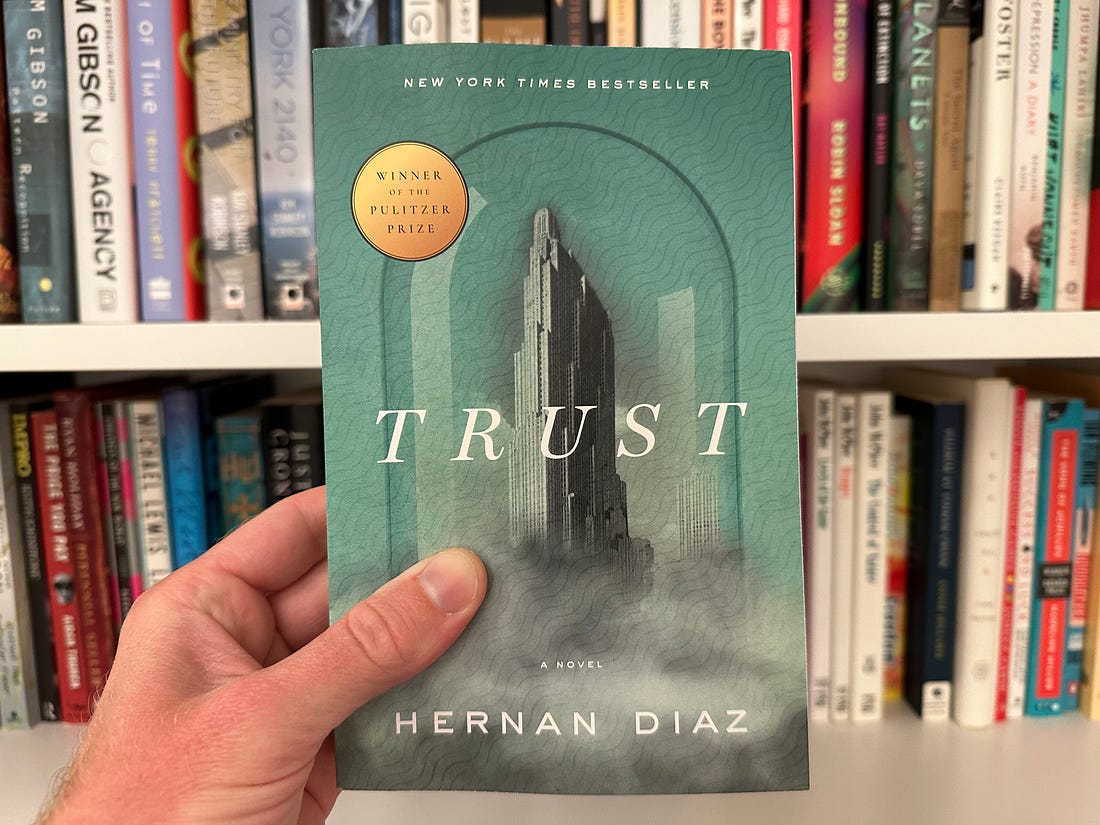
Trust by Hernan Diaz is an onion of a novel in which every chapter peels back a layer to reveal yet more beneath. Following the meteoric rise of a Wall Street financier in the early 20th century, the intricately plotted story will seduce you, transport you, stimulate you, mislead you, and, ultimately, move you.
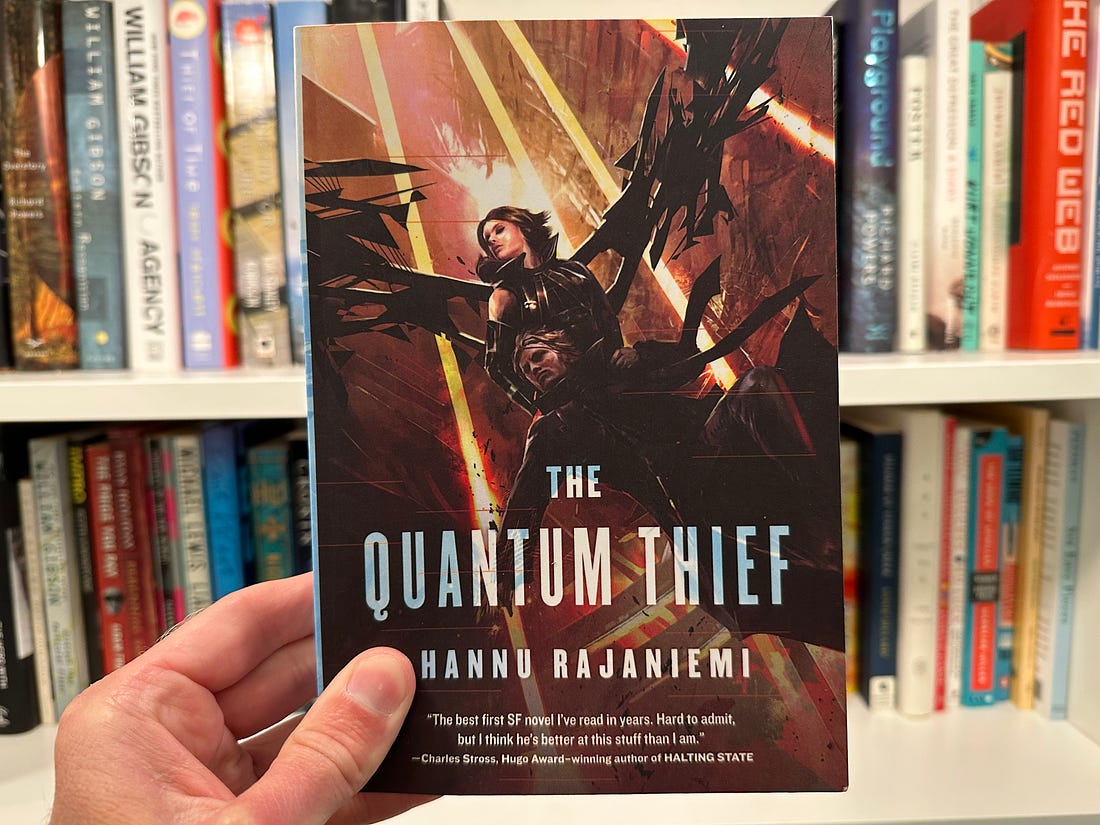
The Jean le Flambeur trilogy by Hannu Rajaniemi—The Quantum Thief, The Fractal Prince, and The Causal Angel—may be the most ambitious science-fiction story I’ve ever read. It takes place in a far future where people can translate their minds from biological brain to software and back, spin up infinite simulated worlds, create billions of copies of themselves, manipulate matter down to the atomic level, use tiny black holes as power sources, and much, much more. It almost feels like some kind of psychedelic fantasy, except that all of it is scientifically plausible in the universe we happen to live in. But this isn’t a dry speculative treatise. It’s a blazing fast, in media res story about a master thief pulling off a series of heists that will change the very fabric of reality and make you question the stories you tell yourself about who you are.
The Thursday Murder Club by Richard Osman is a delightful whodunnit set at a retirement home in the English countryside. Great characters. Fun twists. An endearing sense of humor. Nothing fancy or experimental, just a pleasure to read (and what more can you ask from a book, really?). If, like me, you enjoy mysteries, you’ll be in good hands with Osman.
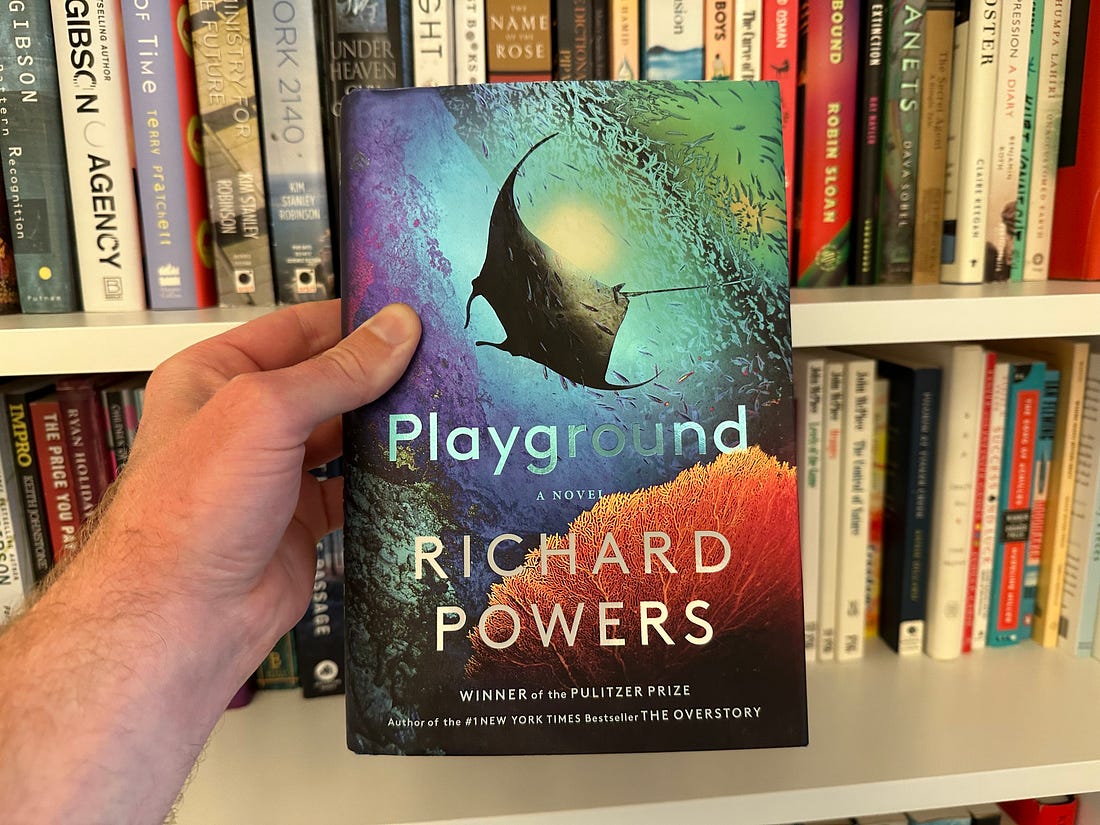
Playground by Richard Powers is a strange and wonderful novel set (mostly) on a remote atoll in French Polynesia that follows the tangled lives of an environmental advocate, a sculptor, a tech entrepreneur, and a brilliant bookworm trying to escape the grinding poverty of Chicago’s South Side. The richly drawn characters drive the story, but what I love most about the book is that it’s a love letter to the ocean with prose that comes closer than anything else I’ve read to capturing what it feels like to, for example, dive a thriving coral reef. Surprisingly, it’s also one of the most thought-provoking things I’ve read about AI, immeasurably improved by the subtlety with which this particular theme is handled.
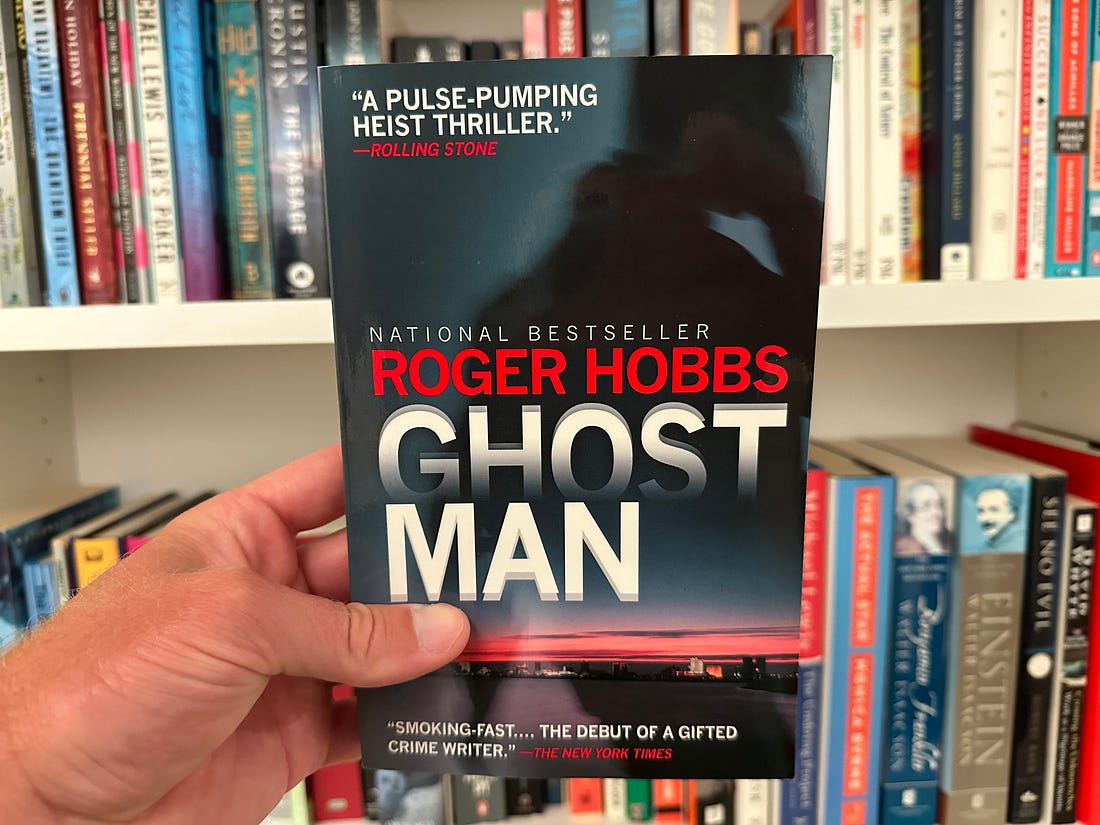
Ghostman by Roger Hobbs is a crime thriller about robbing a Malaysian bank and an Atlantic City casino. Riveting characters. A gut-punch of a story. I love a good heist, and this one is bristling with technical details that make you wonder whether the author has some secrets of his own.
The Player of Games by Ian M. Banks is about a champion board-game player who gets roped into an espionage operation infiltrating an alien culture where political power is determined by the outcome of a uniquely complex strategy game. Set in a far-future human civilization run by a constellation of (mostly) benevolent and inscrutable AIs, Banks’s science fiction is more relevant than ever.
The Spy Who Came in From the Cold by John le Carré is a perfect espionage novel: tight, taught, twisty, and thought-provoking. Le Carré brings the subtle machinations of intelligence operations to vivid life, illustrating their geopolitical ramifications and human cost with equal care.
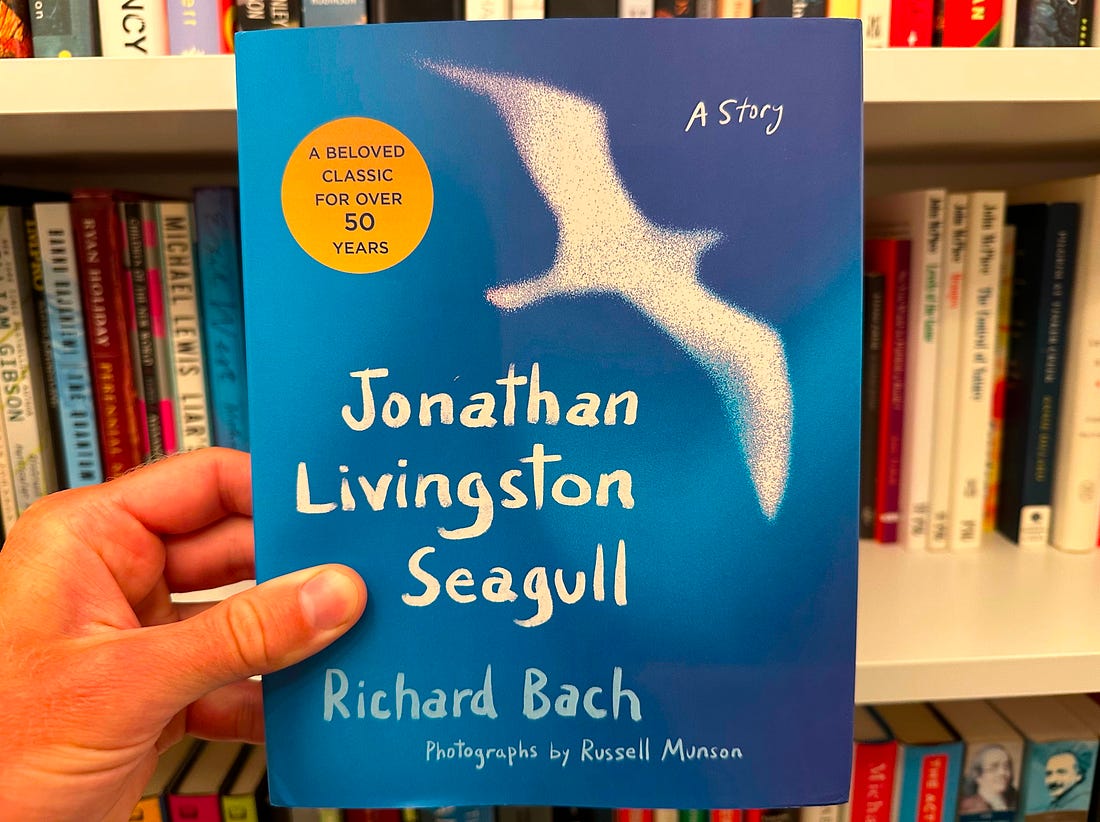
Jonathan Livingston Seagull by Richard Bach is a beautiful fable about a seagull who wants to fly for the pure joy of flight, rather than simply to find food, as most gulls do. Ostracized from his flock for his eccentric behavior, Jonathan embarks on a quest for aerodynamic perfection that doubles as a moving spiritual allegory. You’ve never read a book quite like this one before, and it’ll stick with you long after you reach the end.
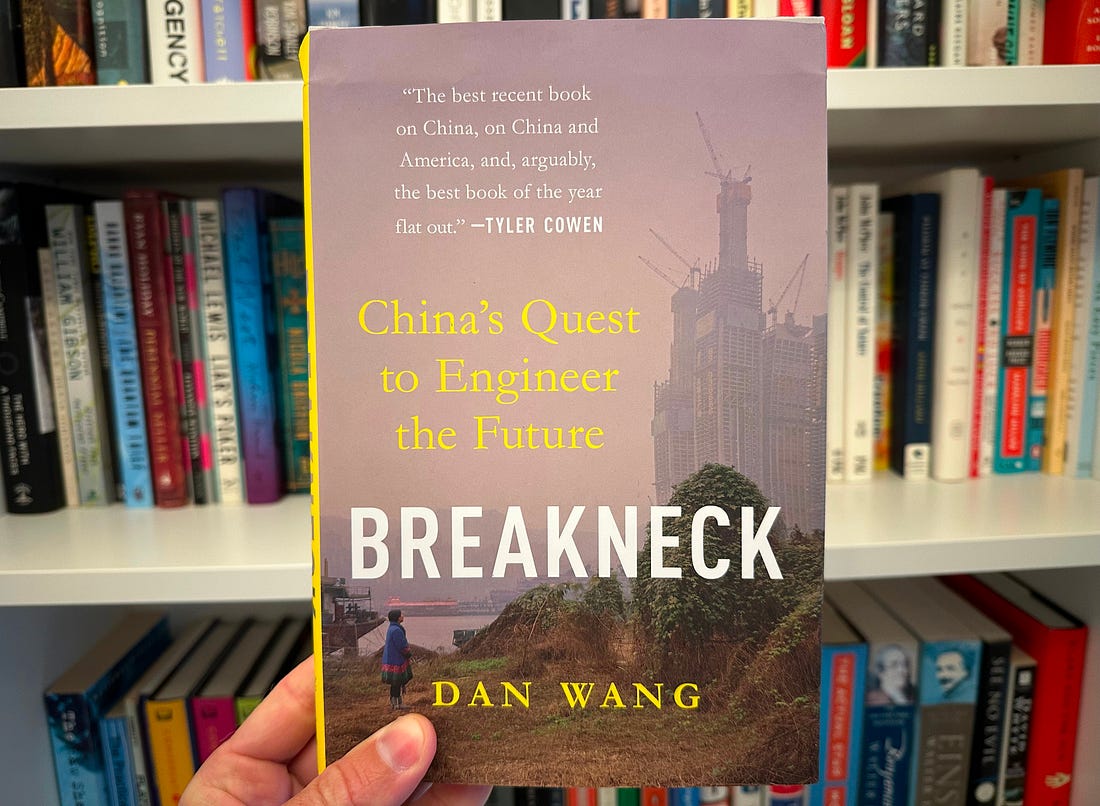
Breakneck by Dan Wang takes you on a fascinating journey through China’s engineering state, juxtaposing it against America’s lawyerly society in an effort to reveal what each country should learn from the other. I’ve been a keen reader of Dan’s personal blog for many years and am delighted to report that this book, his first, features everything I love most about his writing: his unbounded curiosity, thoughtful analysis, compelling storytelling, self-awareness, offbeat sense of humor, and insights born of lived experience. The world needs more deep thinking of the kind Dan brings to the geopolitical relationship that will define this century.
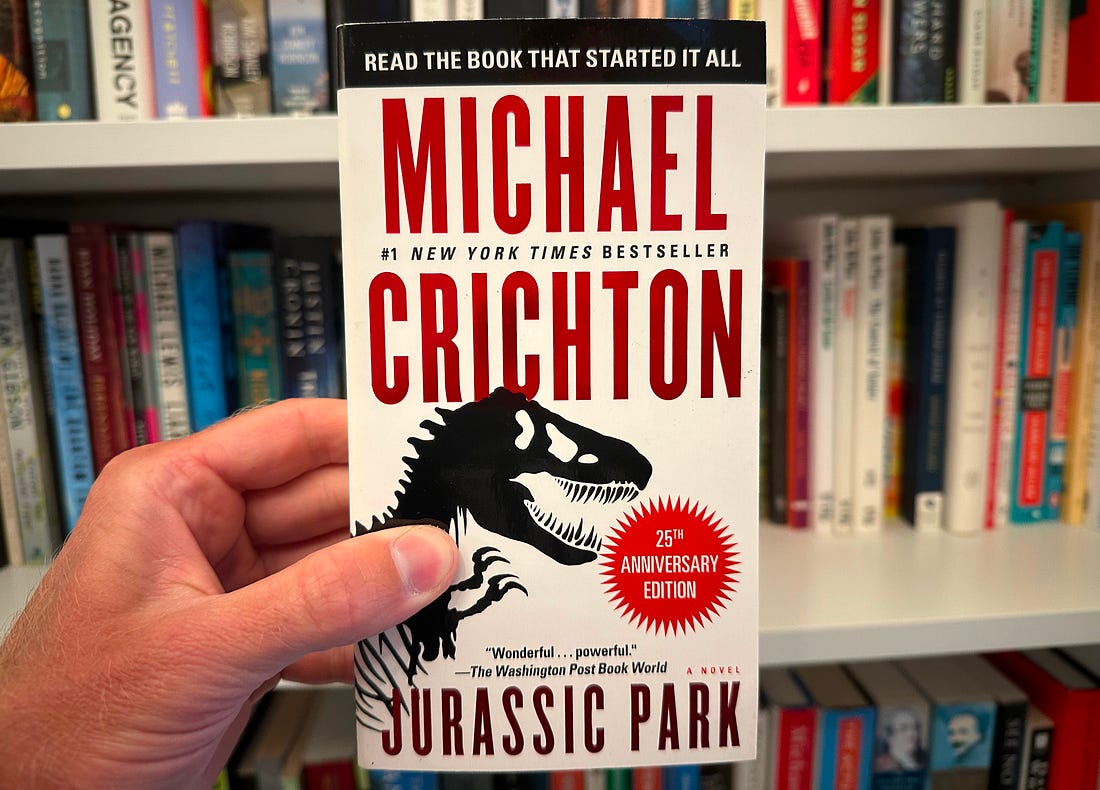
Jurassic Park by Michael Crichton is a surprisingly weird and weirdly underrated novel given how many copies it sold and the popularity of the blockbuster franchise it spawned. The story weaves together many apparently disparate threads and there are extensive speculative digressions into the biotechnology, business interests, and institutional dynamics that make the park possible and its dissolution inevitable. If the movie is supremely entertaining, the book is supremely thought-provoking.
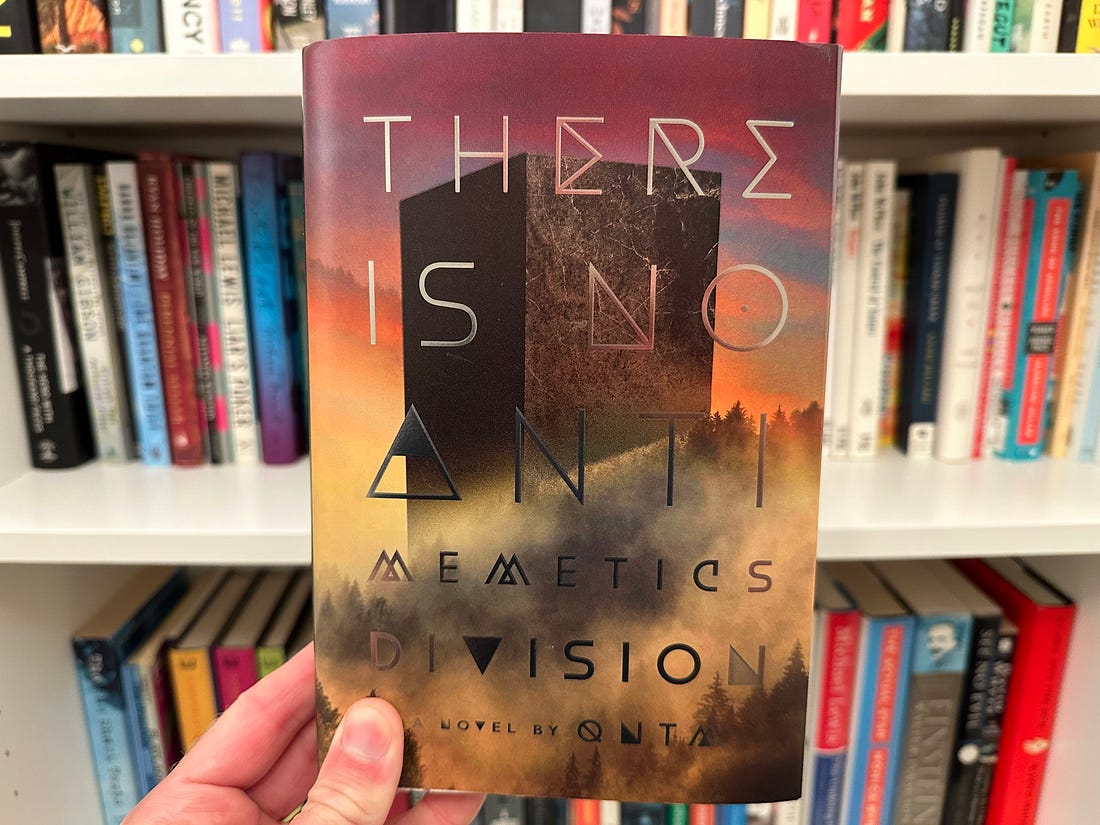
There Is No Antimemetics Division by qntm is a mind-bending psychological thriller about a secret agency tasked with fighting dangerous “antimemes”—ideas that refuse to be remembered. Plenty of stories start with a clever high-concept premise and just let it play out. This one pushes its premise to extremes I never imagined possible, ratcheting up an astonishing amount of tension along the way. Reading it, I asked myself over and over again: Is this the climax? Where could the story possibly go from here? Somehow the story always found a satisfying place to go.
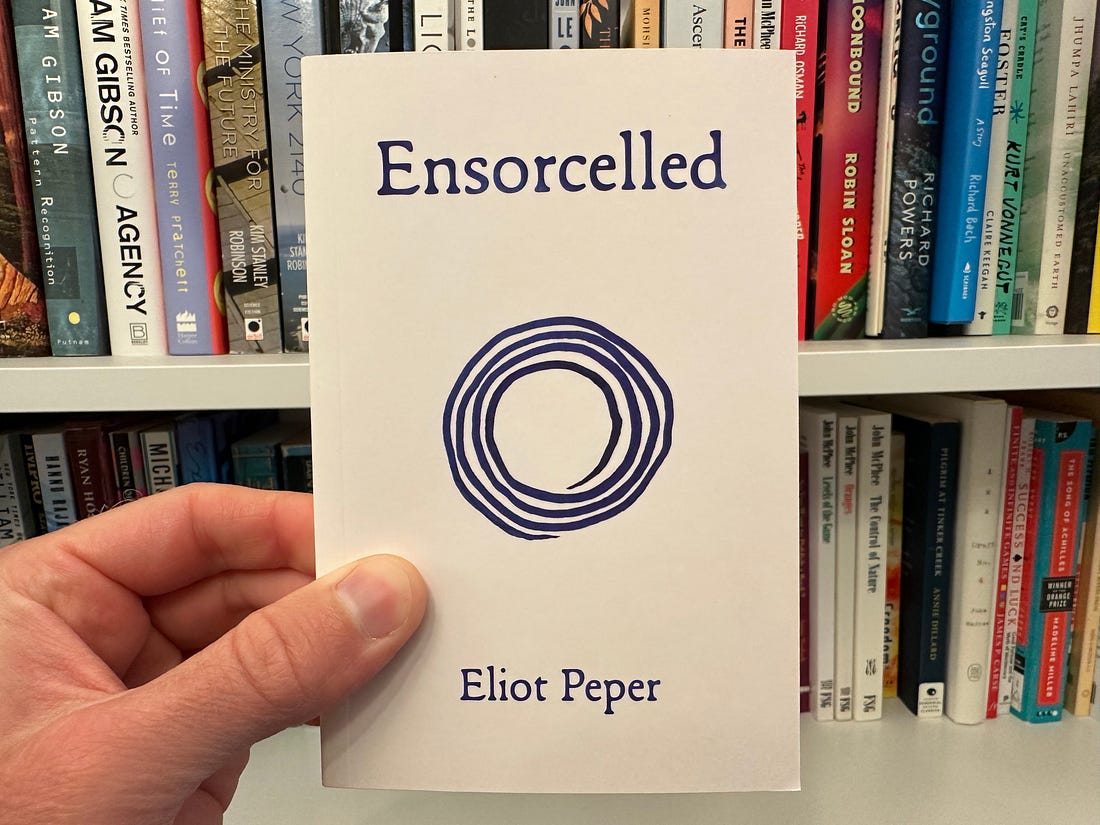
Ensorcelled is the best book I wrote in 2025, and if you enjoy this newsletter, you’ll love it. Here’s how the inimitable Robin Sloan describes it: “In an era of stories unspooling endlessly, loose and lazy, Ensorcelled is a tonic: tight, bright, spring-loaded. Here is proof that you can spin up a whole universe in 100 pages or less, and proof that a warm, encouraging tale can have teeth-clenching tension at its heart. Here is my favorite Eliot Peper book yet!” Thanks for reading. We all find our next favorite book because someone we trust recommends it. So when you fall in love with a story, tell your friends. Culture is a collective project in which we all have a stake and a voice. Best, Eliot Eliot Peper is the author of twelve novels, including Foundry, Bandwidth, Cumulus, and, most recently, Ensorcelled. He is also the head of story at Portola and works on special projects. “A single-serving masterclass in what can happen when you pay attention, drop the distractions, and really look at the world. ”
|