|
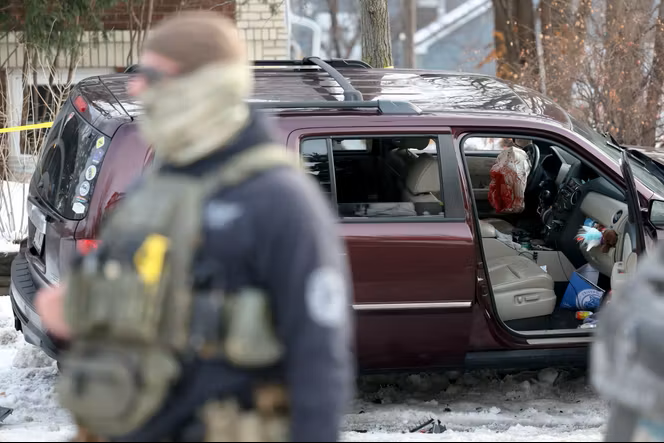
Alignment with supremacy is a vile choice. Raising the natural costs for those who make that choice by putting first things first. Renee Good was a poet, and a mother, and a wife, and many other things as well. She was a human being, which is to say, a unique and irreplaceable work of art. Then a member of Donald Trump's ethnic cleansing secret police force shot her in the face four times, and called her a "fucking bitch," after he did it, and then all of America's fascists claimed she was not a person, in order to justify her summary execution, and to demonstrate the normalized right of white fascists to murder any of us if they want to, and as a pretext to increase murdering if anyone dare resist the murder. It's the standard play for these sorts of things. They didn't say those exact words, mind you. On the news they mentioned that Good was in a gay relationship, and that she had her pronouns in her bio, and these days these are things that Republicans say when they want you to understand somebody isn't a person, and doesn't deserve to live. They also said she was a terrorist. A "terrorist" used to be a person who fought against an official force using what the official force deemed unofficial methods. An official force is official because it holds itself to the same laws it holds others to, or, if it won't hold itself to laws, then it is official because it has the power to deem which methods are official, and has the willingness to enact violence to defend that power. It turns out that we favor the second kind of officialness, here in the United States. So that's what a "terrorist" used to be. These days "a terrorist" is just somebody with a Republican bullet in them or somebody a Republican would like to put a bullet into, in case you didn't know. And the vile president told vile lies about Renee Good, and all his vile lackeys and vile corporate propagandists spread them to smear her. And the vile vice president informed us that the Good killing was a good killing, because (according to him) she was not complying, and that made the heavily armed murderer scared for his life, and any facts of the case aside, members of the Trump Gestapo enjoy absolute immunity. That's right: The heavily armed thugs who have been told by the highest office that they are permitted to kidnap or brutalize or murder whoever they like for whatever reason they like, also get to claim that they are the ones who are frightened. Renee Good, who was shot in the face and murdered, does not get to claim to have been frightened; she only gets to be dead, and to have her murder validated and her murderer justified and praised by power. The secret police were in Good's hometown of Minneapolis because the vile president wanted to terrorize Somali immigrants. And the vile president wanted to terrorize Somali immigrants because he is a vile racist supported by and beloved of vile an army of vile racists, and he wants to run an ethnic cleansing program on their behalf, as part of the ongoing civil war he is unlawfully waging against decent people and decency itself within the country he was elected to lead. And the Somalis were being blamed for a shooting of a national guardsman by an Afghan national who was trained and used in killing by our CIA, and who decided to enact a gun massacre on some troops that the vile president had sent into Washington DC to support his secret police's ethnic cleansing operations there. The vile president told vile lies to blame all Somalis collectively for this Republican-actuated gun crime by a U.S. trained individual, because the vile president and his vile crew habitually treat all Black and brown people as interchangeable in the matter of assigning blame and punishment, even as they refuse accepting any form of collective responsibility or consequence for their own collective actions, because in Republican world, people only get to be individuals if they are white or if a white man permits it, and the power to deem who gets to be a person is what makes somebody a white man, and the white men of this country have granted white men absolute immunity in matters of blame. And if you ask non-Republican people in positions of power and influence about Good's murder, they'll mostly say the problem is training, which is what they say in order to avoid saying that the real problem is that we are in a police state controlled by a Nazi party operating not under the law, but under their claim that might makes right. Why do they avoid saying this? I suspect it is because saying it would lead them toward conclusions they'd rather not engage with. Speaking of official forces and the idea that might makes right, the vile president spent the week before Renee Good's murder destabilizing the entire globe. He entered Venezuela by force and kidnapped the Venezuelan president and his wife, and now they are claiming that they are in charge of Venezuela, and are strong-arming their opposition leader to pressure her into transferring her Nobel Peace prize to the vile president, a man who is now claiming that he deserves to own Greenland and the entire Western hemisphere. And the president's vile chief advisor went out and just said out loud that they will take whatever they want because might makes right. He's talking about waging war with our own allies, by the way. It's something Nazis do. Do you have a word other than "Nazi" for people who do everything Nazis do? I don't. Other countries don't get to be countries unless our Nazi party says so, any more than people get to be people. And only the Republican gets to be peaceful. And only the Republican gets to be law-abiding. And only the Republican gets to fear for his life, and only the Republican gets to practice self-defense. Everyone else gets to be compliant or dead. The Republican never has to pay any costs for what they are doing. Costs—including the costs of blame—are for other people to pay. They have absolute immunity. This is what I mean by supremacy. These are thing things that make me talk about a cult(ure) of abuse. Quick interruption time. The Reframe is me, A.R. Moxon, an independent writer. Some readers voluntarily support my work with a paid subscription. They pay what they want—as little as $1/month, which is more than the nothing they have to pay. It really helps. If you'd like to be a patron of my work, there's a Founding Member level that comes with a free signed copy of one of my books and thanks by name in the acknowledgement section of my upcoming book. While I've been talking about the culture of abuse, I've drawn some very obvious conclusions that nevertheless aren't often treated as obvious. For example: That abuse is misuse of power and public accommodation of that misuse, so we must always pay attention to power dynamics to inform our moral calculations and responses; that preventing abuse requires immediacy to stop the abuse happening now, so we must always pay attention to who is getting hurt and who is doing the hurting; that abusers always demand that their stories and only their stories be told, so whenever opposing abuse we must always first put their victims at the center of stories of abuse; that abusers always point to some finer quality to justify their abuse, because they need to cast themselves as heroes in their stories, and they know their real reasons are vile. This is one way you can tell they understand the difference. The thing about the supremacist rationales: they always involve good things that have been put ahead of more important things. The suppressor of information bans books in the name of free speech. The propagandist suppresses stories in the name of journalistic integrity. The secret police brutalize the community in the name of public safety. The warmonger invades in the name of self-defense. Supremacists claim these things—which are good things—as their exclusive property, not because they revere them (they scorn and destroy them), but because they do not want to pay the natural cost of being thought of as corrupt and violent abusers, which is what they are. You might say that, by being used to justify abuse, these finer qualities are being abused. This means it's very important to put first things first, when you're dealing with abuse, when you are asking (as I have been) the extremely common question how do we oppose a cult(ure) of abuse without becoming abusive ourselves? I agree that would be bad, but if you don't put first things first, you'll participate in the abuse of those finer qualities, and will, in fact, become abusive without opposing the culture of abuse, which I would argue is even worse. With that in mind, there's another first thing I want to put first, which is that alignment with supremacy is a choice, and it's a vile one, and it carries natural costs, and those costs must be paid. I think it is very very very very important to understand that alignment with supremacy is a vile choice carrying natural costs, because otherwise our natural desires for very good things like understanding, empathy, dialogue, civility, and so on, will be conscripted and used against us by abusive people who claim those things for themselves not to honor those things, but to claim absolute immunity from natural costs of alignment with supremacy. Back to Renee Good, a human being who was summarily executed by Nazi thugs. Her murder was an unnatural price of supremacy that she and her loved ones have to pay, in large part because supremacists have been allowed for so long to avoid the natural costs of their own vile beliefs and actions. I'm far from the first to note that Renee Good's murder by armed thugs (who may or may not have badges they refuse to show) is nothing new, despite the way it's being framed. Men of often questionable authority have always been permitted to murder citizens in the name of safety, and to be celebrated as heroes afterward by actively evil and morally lazy white supremacists. What is different is that Renee Good was a white woman, and that makes her murder an unequivocal proof of supremacy to people who have otherwise made themselves ignorant of supremacy. Last week I wrote that white supremacy has more difficulty practicing its abuses against white people, and the shocked reaction to Good's murder when compared to that of (for example) Keith Porter Jr. is a demonstration of that fact. The system views the murder of a white suburban mom and her subsequent grotesque reputational smearing as an aberration in a way that they do not view the same treatment coming to hundreds and thousands of Black people by authorities and non-authorities over the years. A lot of people clearly believe that Black people being murdered by authorities and non-authorities is normal, even though a lot of them haven't told themselves that they believe that. What that means is that some people are probably being shocked into realization of reality, who might not have been before. Those of us who oppose supremacy and fascism might be able to use that fact to our advantage, as long as we remember our lessons, and put first things first. This would involve them being persuaded, which is a very popular tactic to suggest when it comes to stopping abuse. But before we can get to persuasion, we have to put first things first. Let me show you what I'm talking about. Or don't subscribe. I'm not the boss of you. But if you do subscribe, you get one of these essays pretty much every week. Some align with supremacy without telling; some out of ignorance, some out of complacency. Some of these lie to themselves as well as each other, and give themselves rationales and excuses for their accommodating alignment with supremacy; excuses that they actually believe. Others consciously know what they are aligning themselves with, and cynically lie to everyone about not knowing and/or not caring. Still others actively, proudly, and enthusiastically pursue supremacy's vile deeds and are happy to tell. But all of them have chosen to align themselves with supremacy. If they haven't chosen their position, then they can't choose to change, either, and we may as well pitch persuasion out the window. I hope we agree that it would be good if a person aligned with supremacy changed that alignment—put another way, if an abuser for whatever reason decided to stop abusing, and an enabler for whatever reason decided to stop enabling. If we wouldn't be happy to see that change, I would argue we have defined ourselves by our opposition to supremacy to such a degree that we've become calcified to it; so committed to opposing that we resist seeing it end, and in so doing we have actually aligned ourselves with supremacy. And people don't change unless they are persuaded in some way, so it would be good if we thought about how persuasion happens. The way I manage this is by thinking about how I have been persuaded. I don't think I'm special. I think I am persuaded the same ways as most everyone else. Sometimes I'm persuaded by appeals to logic or morality, sometimes by new facts, and most often by new experiences—when something happens in the world or even to me that changes my prior beliefs. After this, my mind changes; sometimes all at once, sometimes after a long process. So far, so good, I hope. Simple observation: The person who changes my mind in each case ... is me. Somebody else might present me with facts or reason, but before facts or reason will persuade me, I must have decided to be persuaded by facts and reason. Until I make that choice, facts and reason will never persuade me. An appeal to morality may move me, but first I have to agree to a morality that involves honoring the humanity of every person, rather than one that enforces my own supremacy. Until I change my morality, a moral appeal will never reach me. An experience might shock me into change, but only if I am willing to pay the natural costs of having been wrong, and go through the humility and ego death of learning new truths and new realities. And we can test this, by offering somebody newly shocked by new abuses like Renee Good's murder some facts and logic, and see if they have made themselves open to them, or if they only want exoneration and forgiveness and reconciliation—if they are willing to accept costs, in other words. Some are. If they are, we should encourage it. Some aren't. For those still aligned with supremacy, a suburban mom getting shot four times in the face hasn't shaken them out of it, anymore than any of the thousands and thousand of almost fantastical-seeming abuses that threaten to overwhelm our senses. I can't imagine anything more persuasive about the fact that we live in a police state controlled by fascists than a suburban mom shot four times in the face. If that won't do the trick, we might despair of persuasion. I hope we see the importance of putting first things first.
⚬──────────✧──────────⚬
Some who are aligned with supremacy have been poisoned by propaganda and misinformation; others have been indoctrinated by family or church or friends or the overall social fabric. And we know that many who abuse were themselves abused, and there is evidence that trauma, especially at developmental ages, can do physiological harm that affects one's ability to develop empathy and more susceptible to fear-based responses. These things are all true, and all of them should be considered as we determine how to deal with a cult and a culture of abuse, as we ponder our responsibility in doing so, and as we think about how to do so without becoming abusive ourselves. But perhaps listing these facts are making you uncomfortable right now, because you know how often those facts are abused, because we don't put first things first. If we don't put first things first, then we might not think about who has power over a mind needing change, which is the person themselves. We might start to believe that we bear sole responsibility for persuading supremacists to leave supremacy, and supremacists bear none, or that supremacists have total control over the persuasive process, and sole discretion to agree or disagree. What is needed is to put first things first. Your father is choking your brother. What do we do?
⚬──────────✧──────────⚬
If we don't put first things first, then we will fail to understand that when your father choked your brother, your father made a choice to do so. And if we fail to recognize that your father made a choice, then we align with the supremacist abusive frame in a multitude of ways. We will pathologize your father's behavior, and make the effects of propaganda and indoctrination and trauma into a sickness that has him, rather than a sickness he has. We will miss the fact that while many abusers were themselves victims of abuse, most victims of abuse do not become abusers. When we miss this, we frame abuse as something caused only by mental illness, not human choice, we draw false equivalencies between mental illness and abusiveness, and we allow supremacist abusers to enjoy absolute immunity for their abuses by casting the blame for all abuses onto mentally ill people, who are already among the most vulnerable people among us. We will turn your father's abusiveness into a problem whose responsibility falls to anyone but himself. Which is what supremacists believe, too. That's their story, and they love to get other people to tell it. We will miss the fact that while all open and proud white supremacists and their white supremacist apologists have been propagandized and socially indoctrinated, many who are propagandized and socially indoctrinated do not become white supremacists. Many heed the call of basic decency, and pay the price of awareness and conviction. When we miss this fact, we make the work that your father must do on his own mind something for others to accomplish, which allows supremacist abusers to enjoy absolute immunity from responsibility for their own abuses, invigorating their notion that all their messes ought to be cleaned up by someone else, and their notion that if their messes are not cleaned up, then the fault lies with somebody else. We will cast your father's abusiveness as something utterly beyond his control, which grants him the absolute immunity from the responsibility supremacists crave. We miss the fact that alignment with supremacy is a choice that many make because the costs of making it have been made so unnaturally low that it has become the easiest choice available, but that many who have been offered that choice have refused it, and have paid the unnaturally high cost of choosing basic human decency instead. When we do this, we dehumanize your father far more than we would if we than accurately name his offense; we cast him as irredeemable far more effectively than we ever could by considering him accountable—because if your father truly has been made incapable of choosing between good and evil, than he is not only not at fault for having chosen evil, but he is truly incapable of choosing good. And we will fall into the trap of thinking that the only mind that matters when it comes to persuasion is your father's, and that the only way to do it is with appeals to morality and logic. Sometimes the right thing to do is to appeal to morality and logic—but only if the person in question responds to such appeals. Sometimes the right thing to do is persuade your father that if he keeps choking your brother, he will not escape the natural costs of abuse. Sometimes the right thing to do is persuade your father that he will be thought of as an abuser and a murderer, which is the natural consequence of what he is doing. This will persuade other potential abusers that acts of abuse will carry the natural consequences of abuse, and in raising the cost of abuse will make them less likely to act in the belief that they are immune. It will persuade your brother than somebody will fight on his behalf, and lend him encouragement. It will raise the price of abuse by introducing the natural cost.
⚬──────────✧──────────⚬
I think there are some things we could do to be very persuasive to abusers that have nothing to do with appealing to logic and morality to people who have shown nothing but scorn for either. We could join a human spirit that refuses to accept unacceptable things. Doing that can be very persuasive indeed. We could refuse compliance with immoral orders. We could refuse assistance to immoral people and we could work to thwart their evil plans. We can organize with people adept at such tactics, learn from them, and provide them what skill and resources we have to offer. We can demand that our leaders behave the same way, and replace them as leaders if they will not. If we do this, and hold them to consequence, we will persuade them we are serious. I recommend being practical and also being aspirational. The practical line is simply the baseline necessity, and will often involve using the existing levers and systems of power, even if we intend to replace them. The aspirational line would be an imaginative structural change to a system that entirely changes the way that costs work, so that natural ones are paid and unnatural ones are avoided. Let me give an example related directly to the matter police brutality and ICE summary executions. Practically, we can refuse to accept any leaders—any leaders—who will not commit to a total abolition of ICE, and investigation and prosecution of every single employee of that vile organization, and of the regime and party that operationalize and energize it. We can refuse to accept any leaders—any leaders—who will not commit to defunding the police in this fascist police state. That should be the baseline. It's easy to be cynical about finding such leaders, but there are some who sometimes do the right thing. Reps Eric Swalwell and Dan Goldman have introduced a bill to strip ICE officers of qualified immunity, making lawsuits and prosecutions easier. This is a good start, and we should encourage it and celebrate it and make it clear that we expect more, and that we will replace those who do not deliver more. Aspirationally, we could begin to work for the total abolition of police and the carceral state. I know many people see this as extreme or unrealistic. To that I say that an aspirational change would be one that sounds extreme and unrealistic; if it doesn't, then it's not aspirational enough—not in a culture of abuse. Let me give you a thought experiment: Imagine a ban on qualified immunity for authorities entirely. Or, better, imagine a reverse in qualified immunity; a new legal framework, under which authority bears greater responsibility than civilians in matters involving force—as it should. Try this on for size: A bill that states clearly that the presence of a person in ICE gear (as well as the presence of any known employee or former employee of ICE in or out of gear) represents a reasonable present threat to civilian life and that civilians, who have a right to fear for their lives, have qualified immunity in their response. This isn't a bill that says it is legal to go out and shoot cops or anyone else; it's simply a bill that puts first things first; a bill that states that in conflicts between police and civilians, it is civilians who can justifiably fear for their lives under the law, and civilians who are far more justified in acting out of that fear to defend themselves, and civilians who should enjoy greater considerations and protections following (hopefully extremely rare) violent interactions. This might sound extreme or unrealistic; I'd invite you to sit with how obvious it is. If our authorities exist for the protection of the people, then the laws should exist for the protection of the people, not the protection of authorities. If the law exists for the protection of authorities, then the authorities do not exist for the protection of the people. In a conflict between civilians and authorities, it is civilians who should receive benefit of the doubt; who should be allowed to claim to be frightened, who should receive qualified immunity under the law. In interactions with authority, civilians are the ones who usually wind up dead, and unlike authorities, civilians are not trained for armed conflict. Civilians have the far more justifiable claim to fear. Authorities, after all, should exist for the protection of civilians; in an interaction with civilians, it is they who should be in more danger than civilians, because their equipment and their training prepares them to handle that danger without a tragic outcome, and if they can't accept that natural consequence of authority, then they should not have the equipment or the authority, and if the interaction results in a tragic outcome, then it is they who should be presumed responsible. If we passed a law reversing the application of qualified immunity, and then started enforcing it in courts, do you think it would persuade law enforcement that it no longer enjoys absolute immunity from consequence for murdering civilians? Do you think it might persuade the sort of people who want to shoot other people in the face from taking on an authority that no longer permits them to do that with absolute impunity? Do you think it would persuade authorities to escalate rather than escalate? Do you think it would start persuading citizens that the system worked for them instead of corrupt and abusive power? I think it might. It would be a start, as we work for the total abolition of police and the carceral state. Again, putting first things first doesn't preclude persuasion or oppose persuasion; it frees persuasion from the abuse it suffers by putting it in its proper place, as a tactic rather than an end goal. And it opens up persuasion, by allowing us a wider field: more methods of persuasion, more targets for persuasion, and more effective persuasion. It puts first things first, and it revokes the absolute immunity that our gang of American Nazis claim for themselves. The Reframe is totally free, supported voluntarily by its readership.If you liked what you read, and only if you can afford to, please consider becoming a paid sponsor for as little as $1/month. If you'd like to be a patron of my work, there's a Founding Member level that comes with a free signed copy of one of my books and thanks by name in the acknowledgement section of any books I publish. Looking for a tip jar but don't want to subscribe? Venmo is here and Paypal is here. A.R. Moxon is the author of the novel The Revisionaries and the essay collection Very Fine People, which are available in most of the usual places, and some of the unusual places. You can get his books right here for example. He is also co-writer of Sugar Maple, a musical fiction podcast from Osiris Media which goes in your ears. Hey, you, get off his cloud.
|