|
Next Page is a newsletter written by senior correspondent and book critic Constance Grady. She covers books, publishing, gender, celebrity analysis, and theater. Read her latest work on our site. |
|
|
|
Next Page is a newsletter written by senior correspondent and book critic Constance Grady. She covers books, publishing, gender, celebrity analysis, and theater. Read her latest work on our site. |
|
|
What Heated Rivalry and gay hockey smut can tell us about ourselves |
Why is America so horny for gay hockey jocks? |
|
|
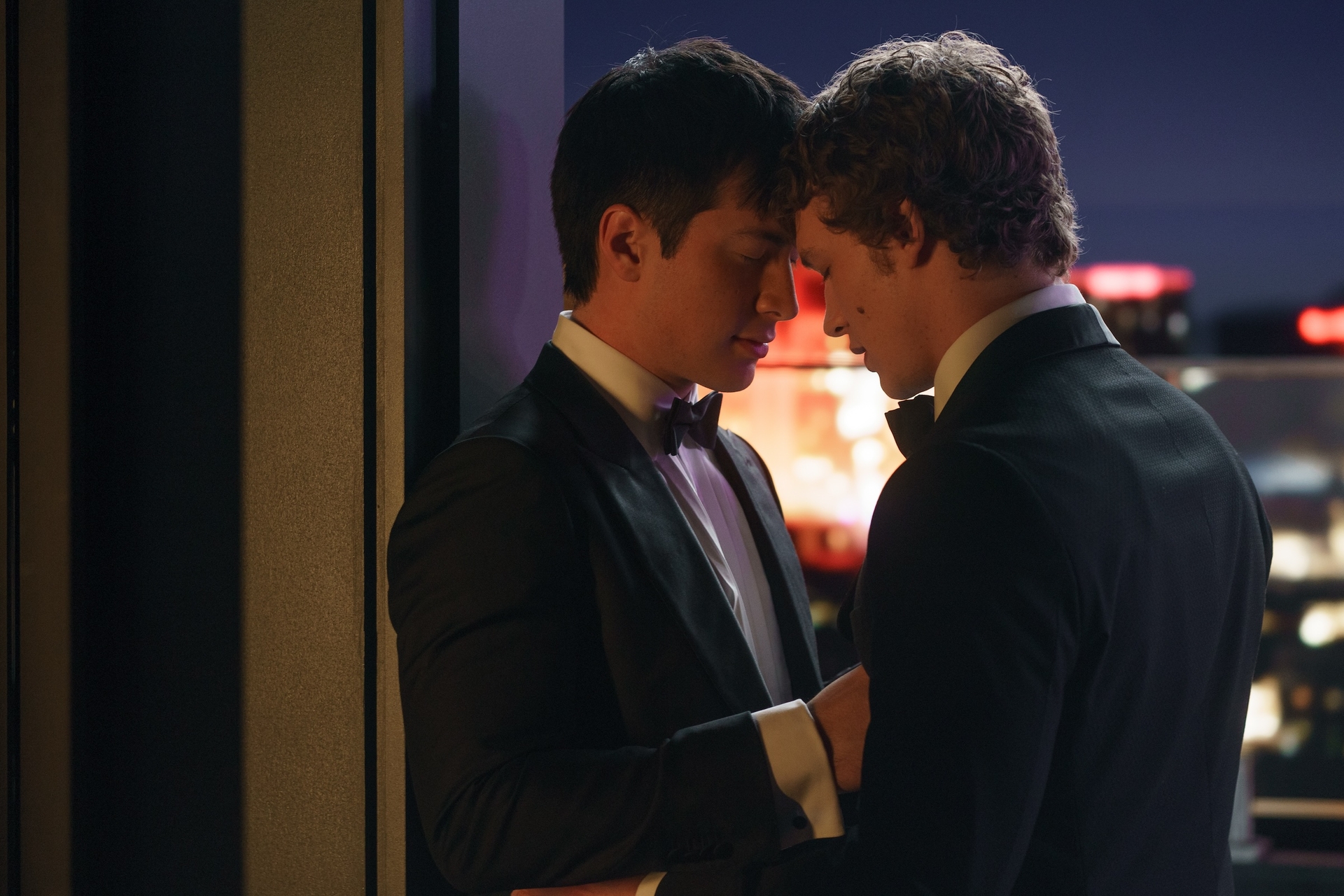
Heated Rivalry, the Canadian import about two hockey players in love airing on HBO, swooped in at the last minute of 2025 to become the show of the moment. Its TV success is a real win for underdog shows — but it’s also a publishing story. Heated Rivalry is based on a series of hockey romance novels by Rachel Reid, and it comes out of a genre that’s been beloved by women and puzzling to men for a long time now.
To understand why Heated Rivalry took off the way it did, you have to understand the history of women writing male-male romance for other women, as well as the bizarrely huge subgenre of romances about hockey players. I sat down with Vox senior correspondent Alex Abad-Santos to explain the bookish context that made this smutty gay hockey show such a phenomenon.
|
|
|
⇰ How Heated Rivalry explains what women want
|
|
|
Constance, please tell me what you thought of Heated Rivalry. Have you read the books? I have to start off by admitting that Heated Rivalry is one of those things that is close enough to the stuff I like that I thought I should enjoy it, but then I simply did not. This is how I feel about confetti/funfetti cake. I like all the things that constitute confetti cake — vanilla, celebration, icing, buttercream, sugar, cake — separately, but it just doesn’t work for me.
Heated Rivalry is famously inspired by Real Person Fanfiction, specifically hockey RPF, which is big enough to be its own genre. (We’ll get into it.) I like love stories, and I like fan fiction, so I was ready to be as obsessed with Heated Rivalry as everybody who watches it seems to be.
But I think I simply read too much fan fiction to be surprised by the structure of the story! It is a very tropey narrative, which you expect from a romance. In book form, that’s part of the pleasure of the genre. Onscreen, though, I found myself craving more surprises and more specificity in the way the characters developed and the way they approached their relationship. Also, all the time jumps made me feel like I should be doing math, and that stressed me out.
Read the full story >> |
|
|
Book recommendations to get lost in |
|
|
-
George Saunders’s magnificent if uneven second novel, Vigil, is a loose sequel to his first, 2017’s Lincoln in the Bardo. Both explore the limbo state between this life and the afterlife, their pages peopled with grotesque, polymorphous ghosts. Vigil, however, takes place in the present day, at the deathbed of an oil baron who takes personal credit for spreading misinformation about global warming. Ghost after ghost visits our baron to try to force him to repent, but he, Scrooge-like, wants to deny wrongdoing. Can even Saunders, with his Buddhist drive toward empathy, bring us to mourn such a person? And what are the limits of empathy? As Saunders explores these ideas, the book becomes more intellectual than it is emotionally stirring, but his perverse, funny prose keeps the novel moving inexorably forward.
-
Larissa Pham’s Discipline plays a neat trick on its reader. It begins by introducing us to Christine, a novelist navigating the fallout from her successful first book. With Pham’s spare sentences and her writerly protagonist, at first you feel you are reading one of what Joyce Carol Oates infamously described as “wan little husks of ‘auto fiction.’” But Discipline is Pham’s debut novel, not her second, and she’s up to something much more playful than you would gather from first glance. The farther I got into Discipline, the more it kept surprising me.
-
Before he came out as trans in 2020, Jude Doyle had spent decades of his career as a public feminist intellectual. In his new polemic, the wittily titled DILF: Did I Leave Feminism? Doyle says he never stopped being a feminist — and makes a strong case that feminism needs trans acceptance to fully dismantle the patriarchy. Doyle is a writer of stirringly strong convictions, which occasionally works against him. (Nuance is not the strong suit of this book.) Nonetheless, he creates a strong intellectual scaffolding for how to think about gender that will help anyone lost in the weeds of the past 15 years of discourse.
-
Madeline Cash’s comic debut novel, Lost Lambs, is the funniest book I’ve read in ages. Pun-riddled and conspiracy-addled, it tells the story of the middle-class Flynns, washed-up former bohemians whose attempt to open up their marriage is ruining the lives of their three precocious daughters. And, oh, about those daughters: One is dating a mercenary who goes by War Crimes Wes, one is flirting with fundamentalist Islam, and one is a pathological liar convinced the public art in the town square is hiding secret cameras. Was Pynchon ever this fun?
|
|
|
📲 For more thoughts from Constance Grady, follow her on X, Threads, or BlueSky.
|
|
|
|