I’m Jason Toon, and I’ve guzzled waaaay too much soda in my life. In this Shoddy Goods, the newsletter from Meh about consumer culture, I look at the single innovation most to thank and/or blame for that, aside from my own lack of willpower. “Have you gone completely out of your mind? This is insane. No one will want to drink that amount of soda.” That was the reaction Dennis Potts, a regional merchandising manager for 7-Eleven in Southern California, had to a distributor trying to unload 32-ounce soda cups. But something told him it was worth a try. A retail veteran who’d later become the company’s Vice President of Merchandising, Potts agreed to send a case of the “too damn big” cups to one store in Torrance, California in 1976 as an experiment. Fifity years later, the results are in. For better or worse, the Big Gulp changed the way a country drinks, looks, and even thinks.
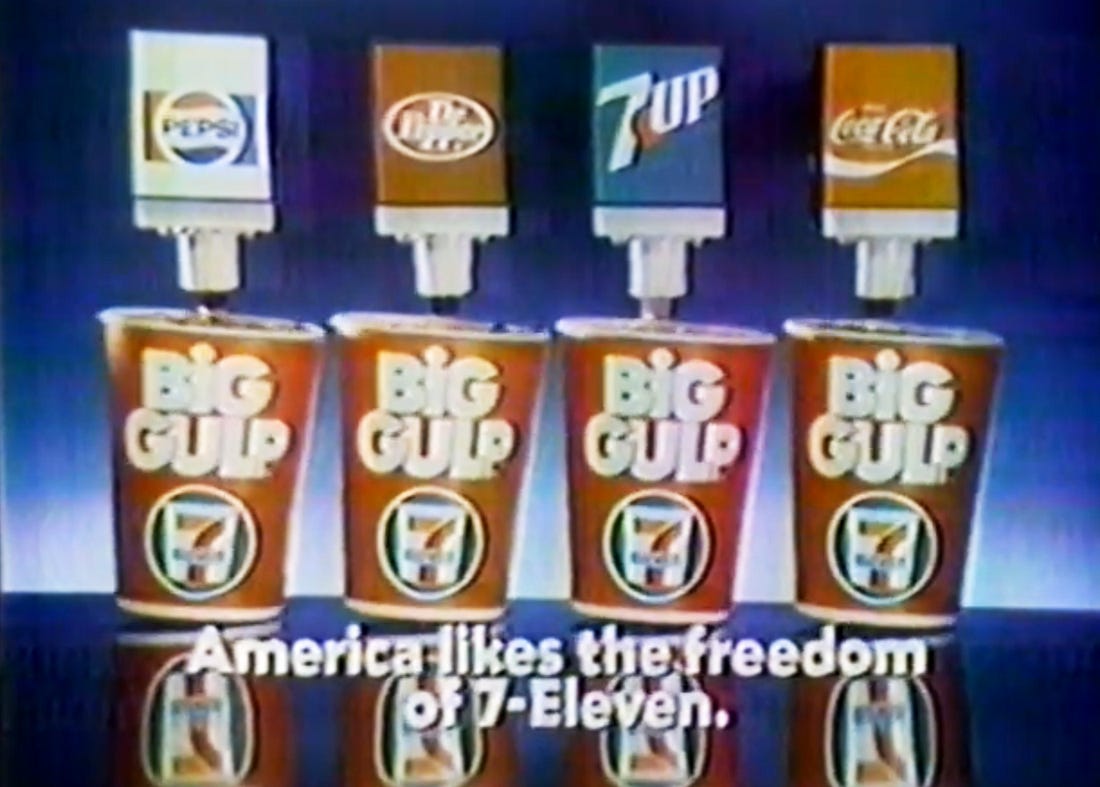
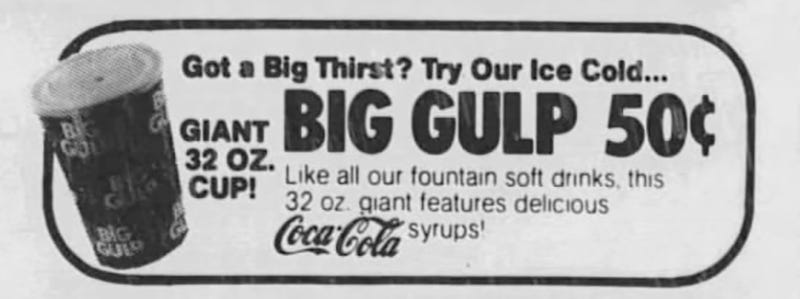
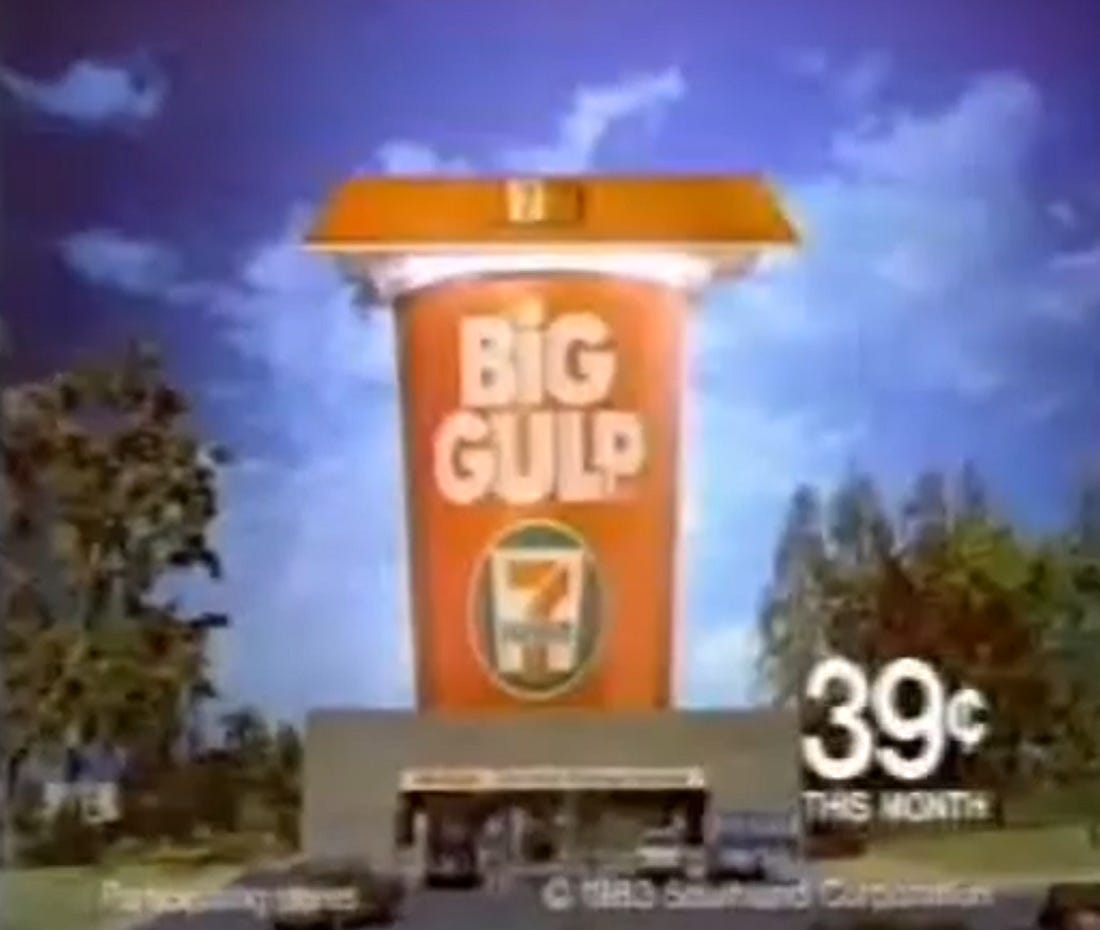
“Overnight, kids were walking around with barrel-sized drinks”Up until the 1930s, the standard soft-drink size in the US was the 6-ounce bottle set by Coca-Cola. Pepsi first upped the ante with a 12-ounce bottle, touting it with the radio jingle “Pepsi-Cola hits the spot / 12 full ounces, that’s a lot / Twice as much for a nickel, too / Pepsi-Cola is the drink for you.” Big talk for the equivalent of a standard single can of soda today. Longtime Coke head Robert Woodruff resisted until 1955, when the company finally debuted 10-ounce and 12-ounce bottles of its own. That same year, it partnered with McDonald’s to offer Coke in their restaurants, with a 7-ounce serving as the only option. The next two decades saw serving sizes slowly creep up, with 16-ounce bottles becoming the last word in fizzy decadence. That consensus blew up with that first wave of 32-ounce cups. The whole shipment (either 500 or 1,000; the story varies) sold out in the first weekend, at 50 cents a cup. By 1978, the Big Gulp was standard across 7-Elevens in Southern California, and by 1980 it was nationwide.
“Overnight, it seemed like kids were walking around with these barrel-sized drinks,” says TV host Katie Puckrik, “and the straw stuck into their face like it was almost an oxygen tank.” “The most profound, important invention of my life”So began a soda-bucket arms race. Other convenience chains rolled out their own beverage behemoths, from ARCO’s The Beast to Circle K’s Polar Pop. In fast food, McDonald’s doubled its largest drink size, then bumped it again to 42 ounces by 1994. KFC responded with its 64-ounce Mega Jug. The 32-ounce Biggie at Wendy’s was demoted to medium in 2006 when it was superseded by a 42-ounce size. But 7-Eleven was not to be outdone. I remember seeing my first Super Big Gulp in 1986 and being thunderstruck by that feeling of wonder and disquiet that prairie-dwellers must have felt seeing the first railroad. Has humanity gone too far? But that 44-ouncer was dwarfed just a few years later by the 64-ounce Double Gulp. Then, in 2006, came the Team Gulp, which mocked both its puny predecessors and the human spirit at a staggering 128 ounces.
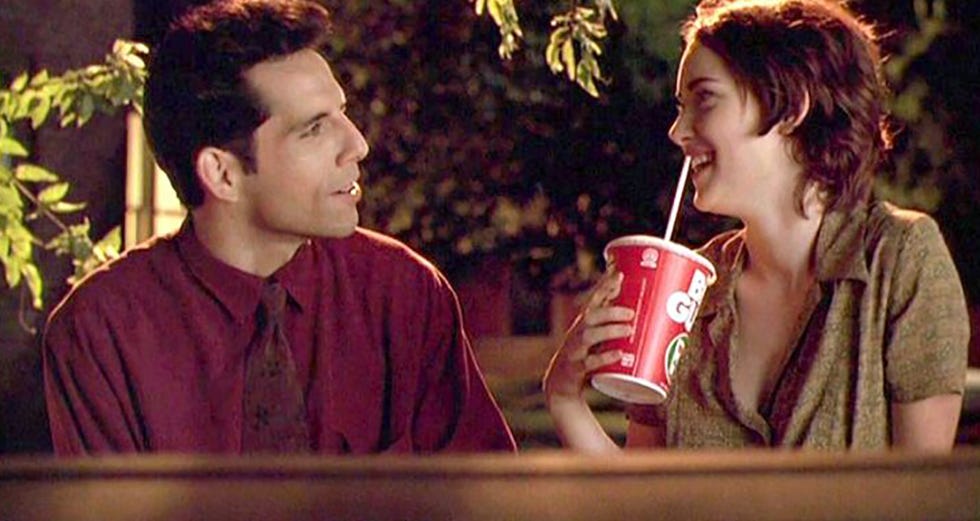
The Big Gulp became a liquid symbol for the abundance or excess of America, sometimes both at once. “The most profound, important invention of my life: the Big Gulp,” muses Winona Ryder’s character on a date with Ben Stiller’s character in the 1994 Gen-Xploitation time capsule Reality Bites. “You get one in the morning, you have your essential vitamins and nutrients for the entire day,” she continues, tongue firmly in cheek and Big Gulp clearly in hand to give 7-Eleven value for their product-placement dollar. The layers of irony stack up like a dispenser full of Big Gulp cups. Alas, the gulps weren’t the only thing getting bigger. Obesity and diabetes epidemics put sugar-laden sodas in the crosshairs of public health activists, culminating in New York City’s failed 2013 attempt to regulate soda sizes and various “soda taxes” around the country. Most soda-dispensing chains have voluntarily backed off a bit from the Peak Gulp era. But the appeal of a gigunda bucket of cold, effervescent sweetness hasn’t lost its fizz. I get it. I grew up working-class. More stuff for less money was always and unequivocally a good thing - especially a luxury item like name-brand fountain soda. I have personally accounted for more than my per-capita share of the billions of Big Gulps (and knockoffs) sold in the last 50 years, and I will no doubt Gulp again. There’s also no denying the Big Gulp kicked off the exploding portion sizes and “always be eating and drinking” mentality that have wreaked such havoc on American health. Clinical evidence is overwhelming that excessive consumption of sugar-sweetened beverages (SSBs) is a major risk factor in diabetes, obesity, and other health concerns. And no product did more to increase that consumption than the Big Gulp. Optimistically, maybe our species is just still learning to adjust to the widespread availability of cheap calories. SSB consumption is already trending down. One thing you can say for the Big Gulp is that it did expose how rock-bottom cheap fountain soda actually is: just a few cents’ worth of water and corn syrup. That’s why fast-food chains eventually said “screw it” and introduced all-you-can-drink free refills. The human body simply cannot drink enough fountain soda to make free refills unprofitable - believe me, I’ve tried. As it turns 50, the Big Gulp is as American as Las Vegas. It’s excessive, it’s accessible, it’s tacky, it’s hard to resist, it’s bad for you, sometimes it’s exactly what you want, and it isn’t going anywhere.
I’m solidly a Coke Zero guy, and I drink 2-3 cans a day, depending on lunch. That’s after a couple cups of coffee in the morning. I’d say that’s been fairly steady my whole adult life, though with the necessary switch to zero-calorie around the Great Metabolism Slowdown of your mid-30s. What’s your soda habit like, and how has it changed over time? —Dave (and the rest of Meh) America loves the crisp, cool refreshment of these past Shoddy Goods stories:
|