Monopoly Round-Up: Why ICE Polices in Minnesota, and Not the Corporate Board RoomLaw enforcement budgets show we defunded those who police corporate America, while ramping up coercion on working people. Plus, Dana White tries to take over boxing & the FTC appealed its Meta loss.
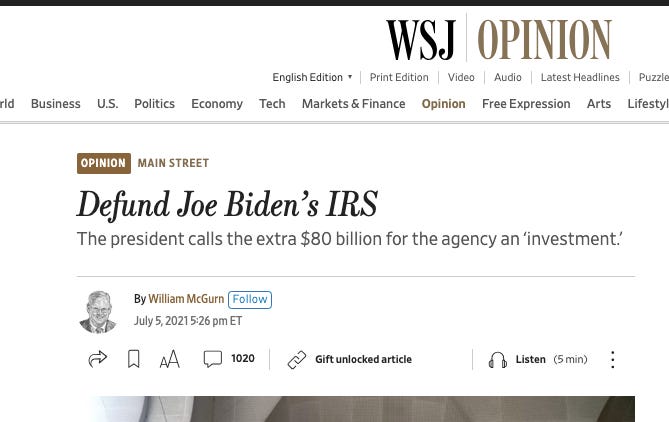
There’s a lot of monopoly related news, as usual. The FTC is appealing the Meta monopolization loss, a Chinese company bought Nathan’s Famous hot dogs, and Dana White’s Ultimate Fighting Championships is trying to sneak a bill through Congress that would help them take over boxing. Before getting to the full slate of news, however, I want to focus on the raids of the Immigrations and Customs Enforcement (ICE) in Minnesota, where the Trump administration sent ICE officers as part of a crackdown. The net effect was controversial killings of several U.S. citizens by ICE in the last month, including one yesterday, along with broad anger among locals. 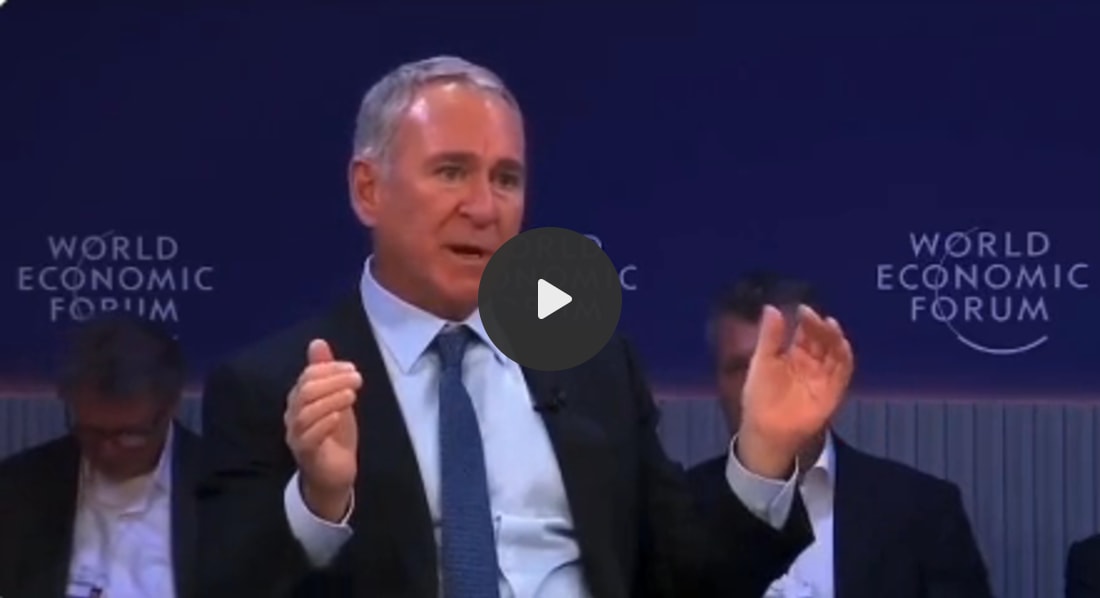 I was going to write about weird economic statistics, but I think the way we use policing resources is a much more appropriate topic based on this explicit power of state coercion that we’re seeing, contrasted with Griffin’s anger at extremely mild attempts to check corporate power. There’s a modest if direct connection between the situation in Minnesota and monopoly power. Last week, I noted that health care monopoly reform was finally set to pass Congress, “barring something extremely unusual.” Well what just happened was “extremely unusual.” PBM legislation is attached to funding for ICE, and Democrats are now pledging to block its passage. While worth noting, that’s a minor concern, as my guess is it will eventually be passed. This moment is a good one to think about how we allocate law enforcement resources. The immigration raids we see are dramatic, but do not seem to me to be the best way to achieve their stated goal of mass deportations. If the administration truly wanted to deport undocumented workers, they would crack down on the companies, like meatpackers and large farms, who hire them. But doing so would require policing of corporations and employers, which the GOP generally seeks to avoid. These large made-for-TV cracking of heads strike me as a brutal communications strategy. And that’s true for a lot of the choices we’ve been making in policing for decades. Indeed, the era of rising corporate power from the 1980s onward was characterized by a broad defunding of the police who investigate and regulate the behavior of political and economic elites. At the same time, we have increased policing resources to impose order, if not actual policing of bad behavior, on working people. In essence, there is now a zone of elite impunity for the Jeff Epstein class, but poorer Americans are increasingly subject to a host of restrictions and state violence. For clarity’s sake, I’m going to call money budgeted to police the non-rich to be “blue collar policing” and that budgeted to police the rich to be “white collar policing.” There’s a conspicuous gap in this analysis, which is that I’m not looking at the quality of policing. Having lots of cops who know the community is an important part of a safe democratic regime, whereas incompetent aggressive police decked out in military gear can be the foundation of an authoritarian state. Looking at budgets doesn’t help with this quality assessment. Nevertheless, they can tell us something. Let’s start with what’s happening in Minnesota, and ICE in particular. ICE has several mandates, and right now, its main emphasis seems to be deporting people. But “customs” is also in the name of the agency, which means that it manages ports, processes tariffs, inspects cargo, and otherwise regulates and facilitates international trade. For instance, customs workers block shipments of goods made with slave labor from coming into the U.S., they seize shipments of fentanyl, and they manage duties for goods made in unfair ways designed to undercut U.S. producers. The non-deportation parts of the agency deal with corporate power, aka “white collar policing.” Last year, the Trump administration sent an additional $175 billion to the Department of Homeland Security, which is about $520 per American, including $75 billion for ICE. And that’s on top of the agency’s $11 billion annual budget. So where is this new money going? Virtually all of it is headed to aid in deportation: building detention camps, hiring new ICE officers, constructing the border wall, and so forth. About $350 million of additional monies are going to the part of ICE that manages trade flows affecting corporate America, which is 0.2% of the new money allocated to DHS. So pretty much all of the new money going to security is headed to “blue collar policing.” Let’s contrast the $175 billion pot of money with that of the Federal Trade Commission and the Antitrust Division, the ‘white collar policing’ of the entire corporate world in our $30 trillion economy for monopolization and consumer abuse. In 2026, the FTC will get $383 million, and the Antitrust Division budget will receive $250 million. There are about as many people at the FTC as there are guards for the Smithsonian museum complex. We have a few dozen, at most, looking at health care, a $5 trillion sector. In other words, the Federal agencies looking at all of corporate America have just 0.5% of the resources that DHS got in additional money solely to deport people. And this puny under-funded group is what Griffin was complaining about as tyranny. While ICE is the most dramatic instance of coercion on the powerless, it’s far from the only one. Take the IRS, which collects taxes on all of us and on corporate America. In 2022, Joe Biden provided $80 billion over ten years to modernize technology, audit the superrich and private equity, and do things like have people available to answer calls during tax season. Here’s the IRS’s press release in September of 2023, where it said it would use this money to launch a “sweeping, historic effort to restore fairness in tax compliance by shifting more attention onto high-income earners, partnerships, large corporations and promoters abusing the nation’s tax laws.” They started to do some serious white collar policing, looking into private equity and venture capital. Here’s the Wall Street Journal angrily demanding a defunding of those police a few years ago.
In 2025, Trump did exactly that, taking that extra money away. And he has further cut the budget of the IRS, so between 80-90% of the new investigations on corporate America have ended. Just a few days ago, here was the latest funding deal. This trend, while accelerated under Trump, is longstanding. Liberals tend to vehemently dislike J. Edgar Hoover, and for good reason, but Hoover’s FBI was heavily involved in antitrust work. In 1936, FDR’s administration got complaints from independent studios and exhibitors, and referred them to the FBI. Hoover had agents investigate, and ended up submitting an 89-page memo that helped foster the ground-breaking case that broke up the studio system. The FBI’s legacy of white collar enforcement continued for decades. In 2004, as the housing bubble was inflating, the agency warned of an “epidemic of mortgage fraud,” which was more farsighted than virtually every economist. The FBI budget exploded in the 2000s, today it is at $11 billion. Even so, I’m told the Bush administration virtually shut down investigations into antitrust and moved them to counter-terrorism. In 2009, Obama was uninterested in providing resources to go after bank fraud during the financial crisis, as Jeff Connaughton noted in his must-read book The Payoff. Today, a fraction of FBI resources go to white collar crime. And the Trump administration has further eroded its corporate crime and public corruption units. There are a lot of policing agencies inside the Federal government beyond these guys. The Department of Housing and Urban Development has cops, so does every branch of the armed forces, the national parks, even Amtrak has police. There are civil-only policing agencies, like the Securities and Exchange Commission and the Commodities Futures Trading Commission. Congress has its own police force. At all of these, the trend is the same. If it’s white collar, it is getting slashed, if it is blue collar, it is probably stable or getting a big increase in funding and power. I think my favorite weird white collar cops are also America’s oldest white collar crime investigative unit, the the Postal Inspection Service. The USPIS was started in 1775 by Benjamin Franklin, before the American Revolution. They have always been important in white collar crime, because they handle mail fraud, which encompasses a whole range of activities from investment scams to check theft to illegal mail order prescriptions. In the movie Wall Street, Charlie Sheen’s character Bud Fox is arrested for insider trading by the Postal Inspector Service. An inspector general once told me the last major complex financial fraud investigation in the 2000s was a result of the USPIS, but they have since de-emphasized white collar crime.  None of these points I’m making surprise anyone, but they are worth observing. A key part of any state is policing. It’s easy to fall into silly traps about how big the government should be, or how small, but the truth is that governance isn’t about the size of the state, but about who gets governed, and why. And nothing shows this as powerfully as budgets for policing. As we think about what kind of society we want to have, we have to think about who should be policed, and for what purpose. The situation that ICE is imposing on the people of Minnesota is making that very clear. As GK Chesterton put it, “The poor have sometimes objected to being governed badly; the rich have always objected to being governed at all.” And now, the rest of the monopoly-related news, after the paywall. It’s a pretty remarkable week. The Department of Homeland Security is worried about people with “class-based or economic grievances,” a Republican Congressman who had brain surgery and got denied for medication eight times by CVS ripped that company’s CEO, David Joyner, at a hearing, and Dana White is trying to take over boxing by sneaking a bill through Congress to eliminate rules prohibiting the monopolization of that sport. Oh, and there’s now an entire group of Congressmen focused on lowing utility bills, Kid Rock is coming to the Senate to blast Ticketmaster, and the Supreme Court said the Federal Reserve is a special regulator because reasons. We live in the dumbest timeline. Nevertheless, read on... Continue reading this post for free in the Substack app
|